
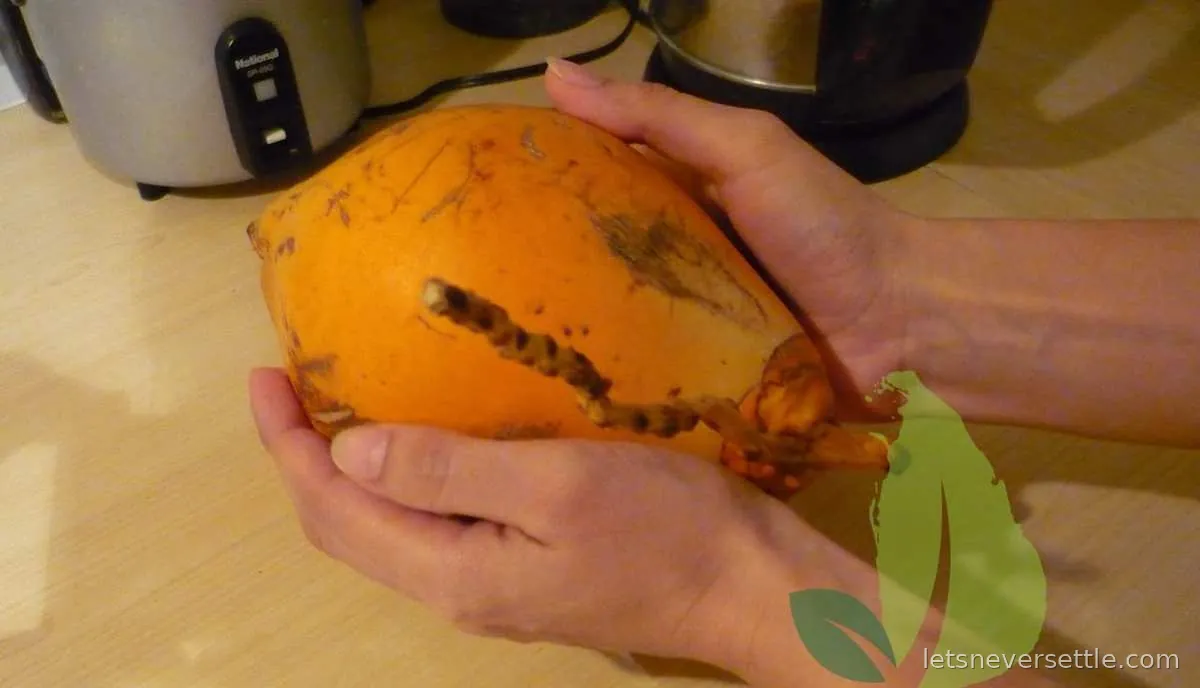
You will see them before you know what they are: piles of bright orange coconuts on the back of a bicycle, stacked at a roadside kiosk, heaped on a table under an umbrella. That is thambili, the king coconut, and it is native to Sri Lanka.
The name is the colour. Thambili means orange, which is worth knowing because the fruit Sri Lankans call an orange is green.
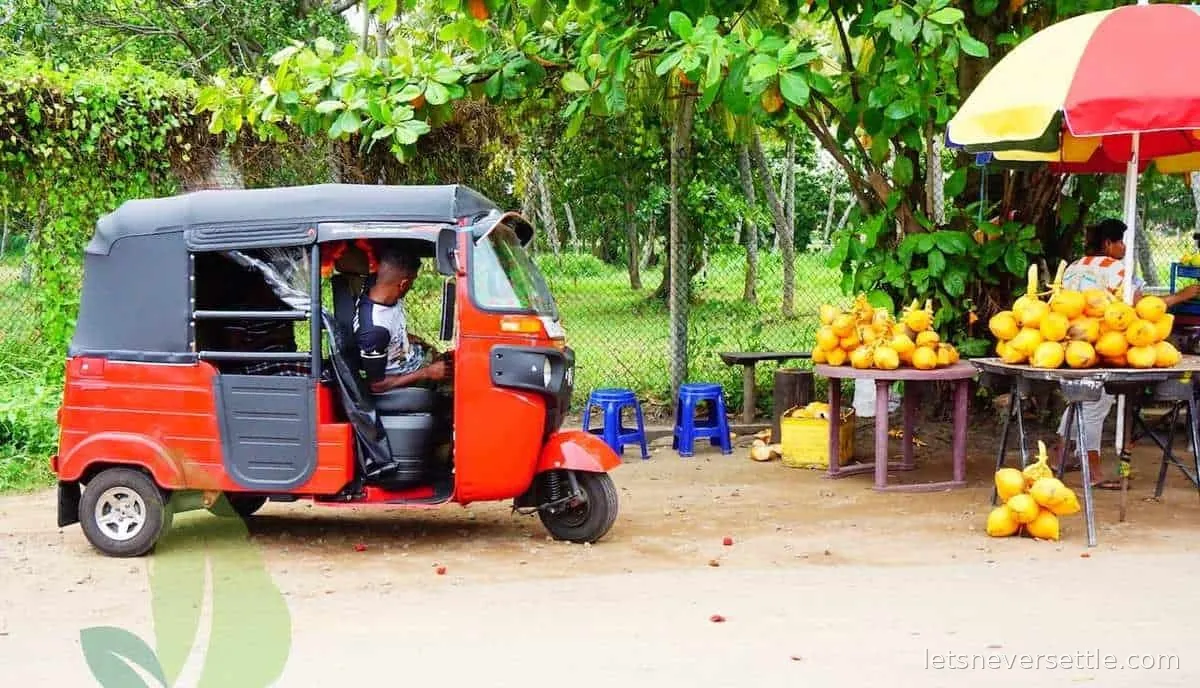
How to tell a good one
Colour does the work. The younger the coconut the brighter the orange, and an older one goes thick-skinned and dull. Younger is what you want.
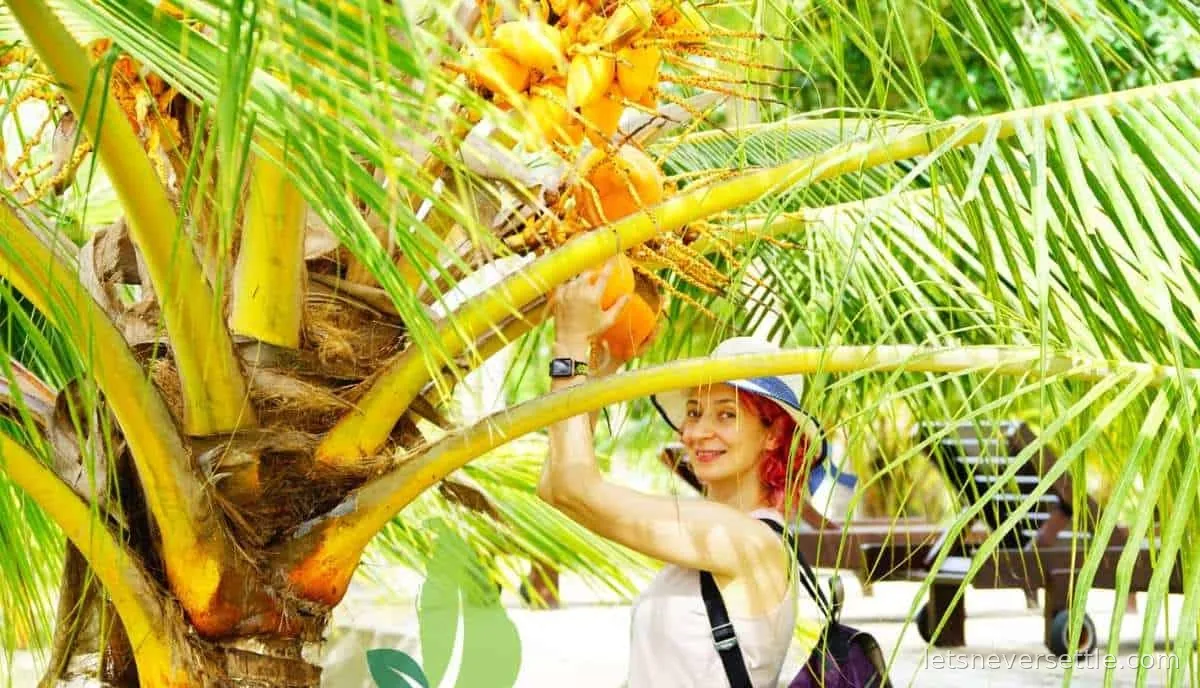
Drinking one
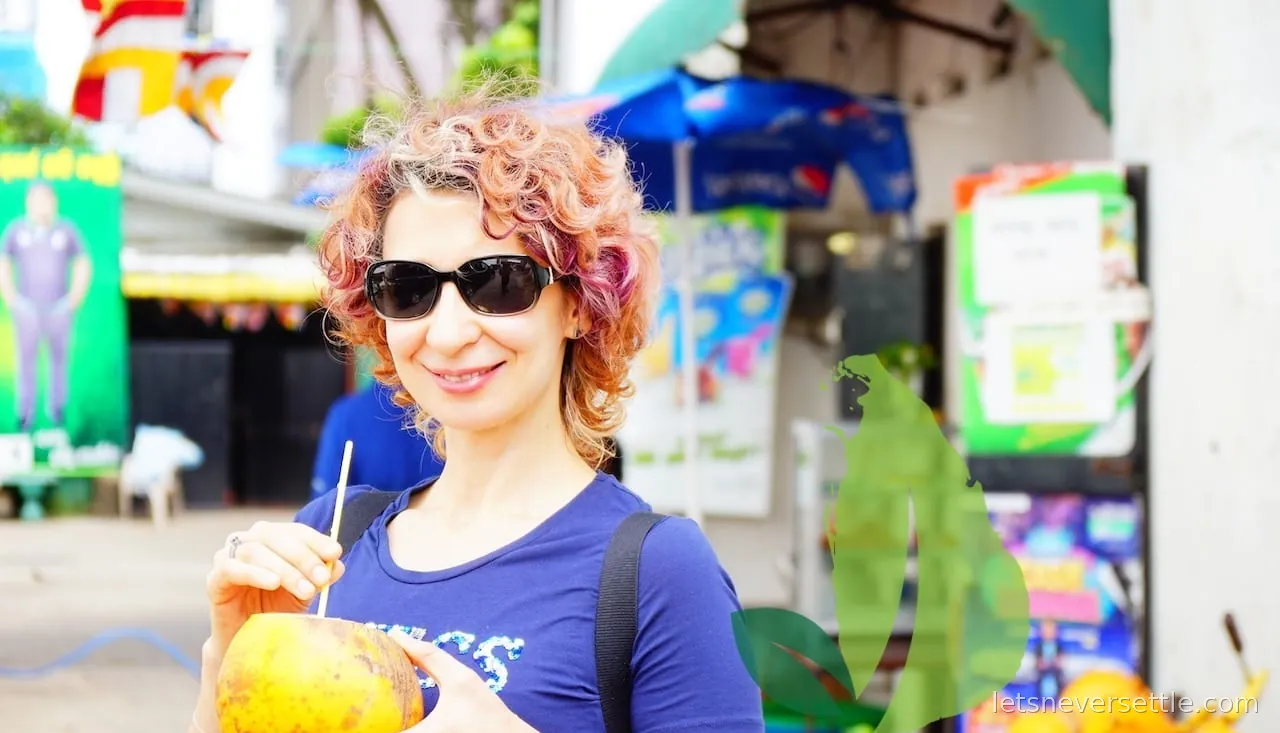
The vendor will ask whether you want it opened there and then. They cut in at the stem end, on a slope, and hand it over with a straw. The water is sweeter and less salty than a green coconut, and on a hot day it is very hard to walk past one.
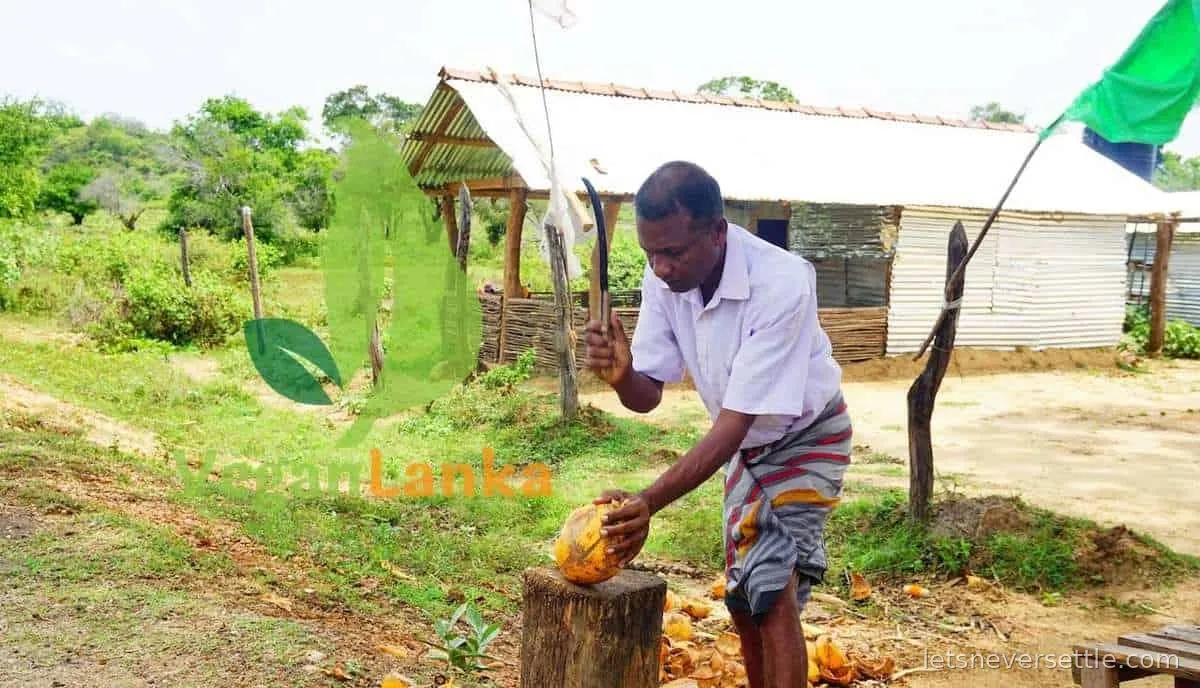
The bit most visitors miss
When you have finished the water, hand it back and ask them to split it in half. Inside there is a soft, sweet, jelly-like layer of flesh you scrape out with a piece of the shell. Most people drink and walk off. Do not be most people.
They are available year round and sold everywhere: beaches, roadsides, the backs of mopeds and trucks. More of what we ate and drank on the island is in everywhere we have been in Sri Lanka.
Also worth hunting down: the 29 varieties of banana and the sugar apple.