Kharkhorin, once Karakorum, capital of the Mongol Empire: temples and a gilded Buddha at Erdene Zuu monastery, plus a picnic on the Orkhon steppe.
Kharkhorin doesn't look like a former capital of the largest land empire in history, and that's rather the point. Genghis Khan's Karakorum rose and fell here on the Orkhon steppe, and in May 2024 we drove west from Ulaanbaatar to see what remains.
The drive west
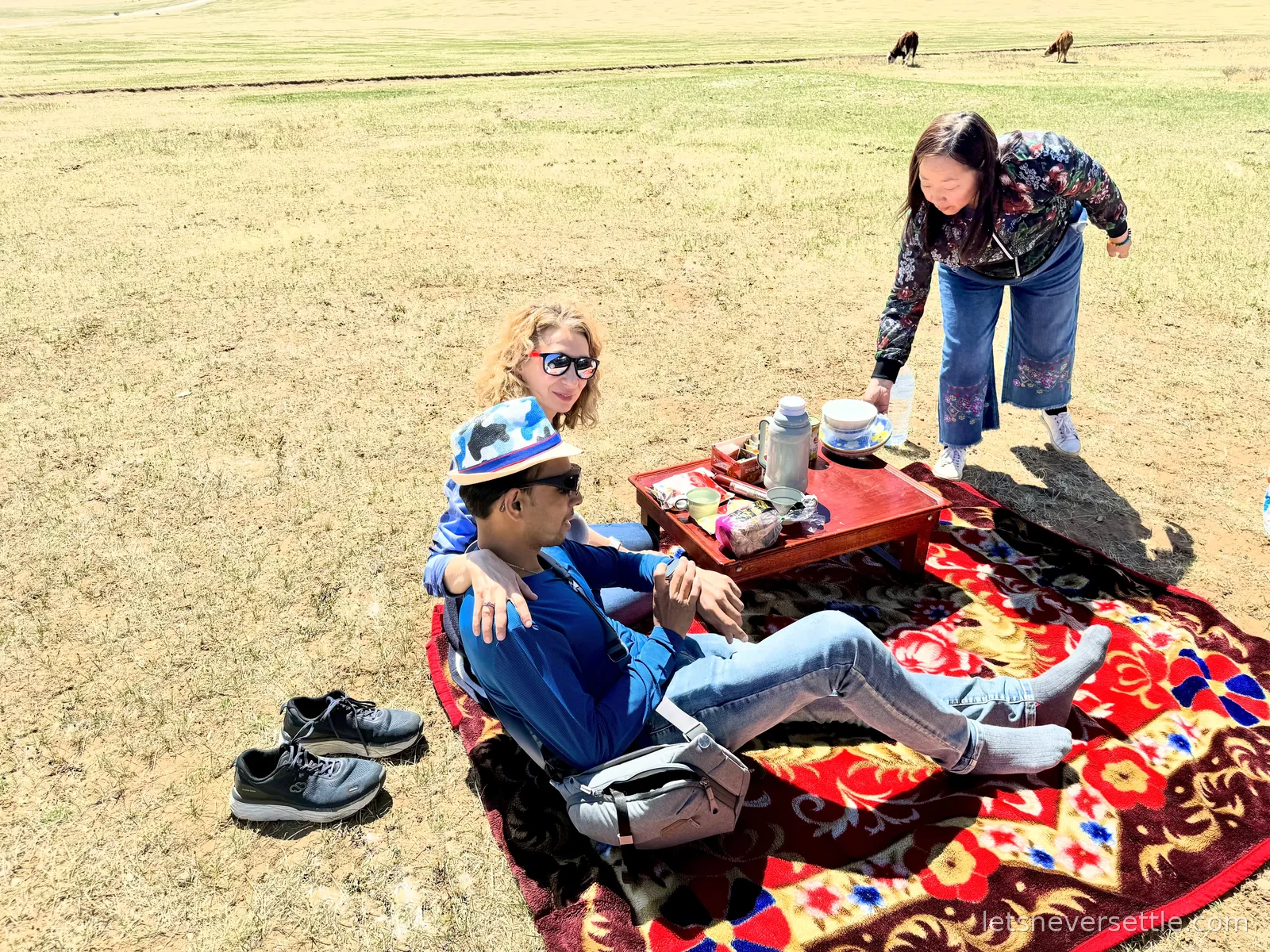
Getting there's half the story: hours of open grassland in every direction, and a lunch stop wherever the view looks best, which is everywhere.
Lunch stop on the steppe just east of Kharkhorin: a blanket, a thermos of tea, and cows for company. Shoes off, obviously.
Erdene Zuu monastery
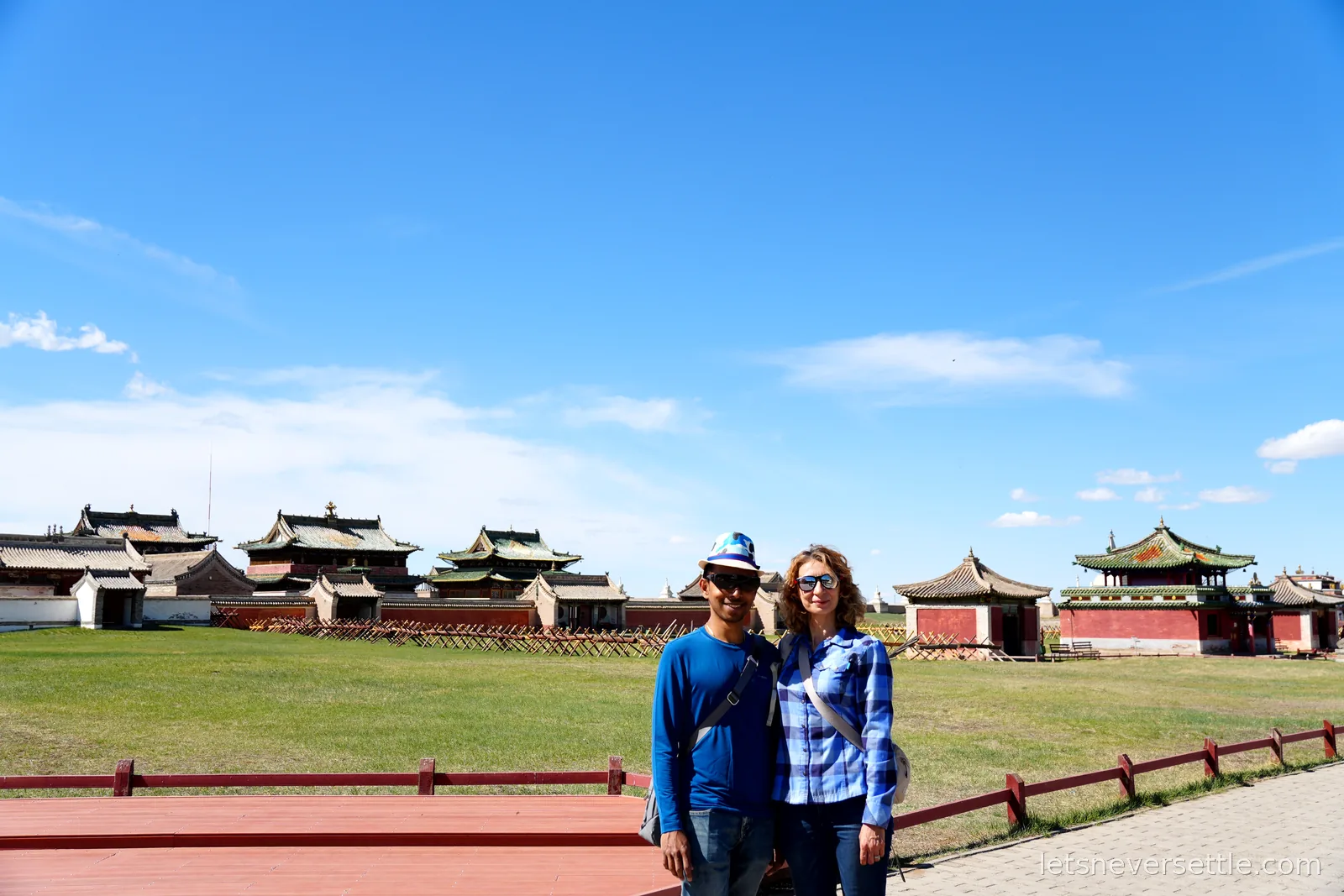
What survives of Karakorum is mostly here, inside the walls of Erdene Zuu, Mongolia's oldest surviving Buddhist monastery, built in part from the stones of the ruined capital. Beyond the wall it's all lawn, sky and temple roofs.
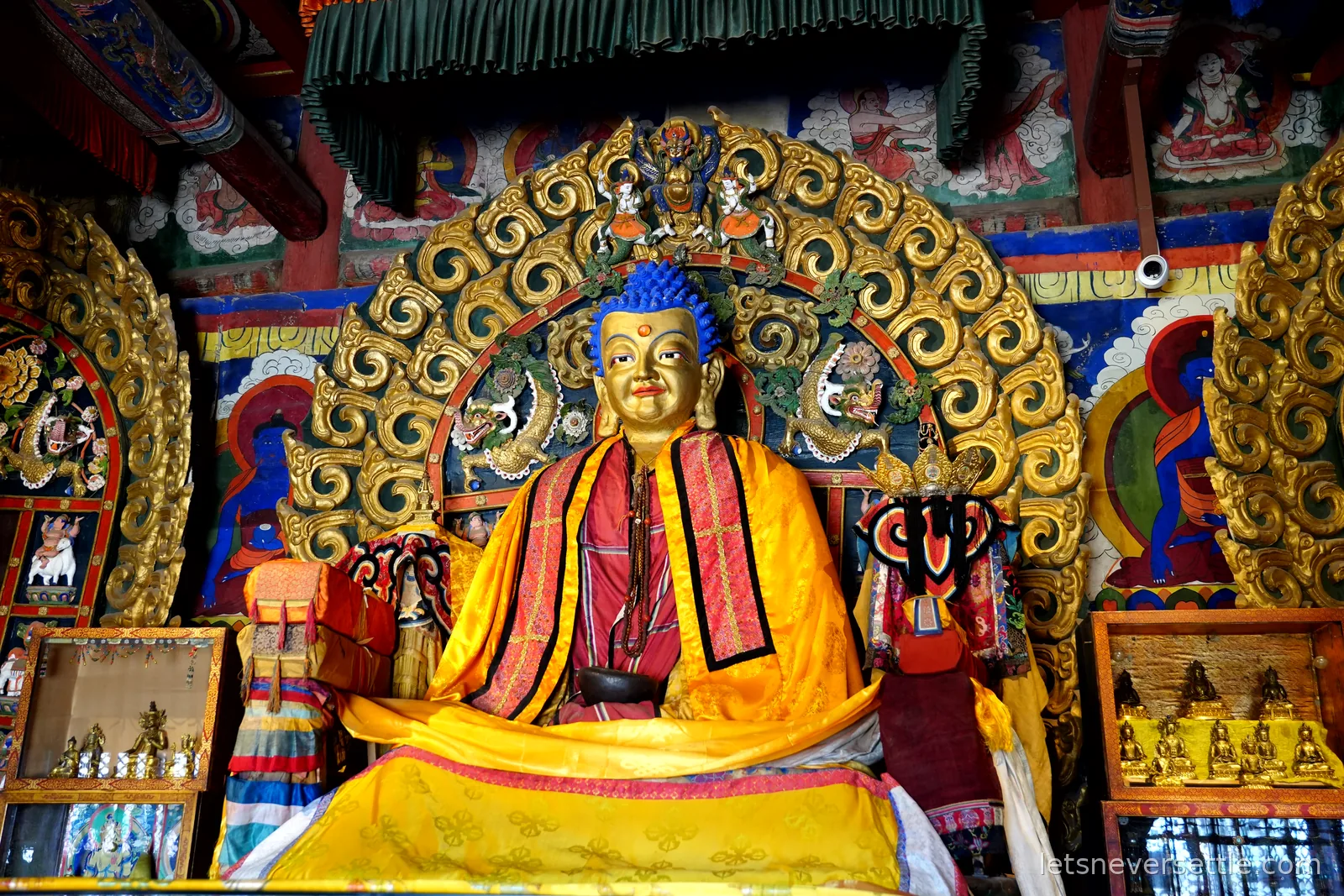
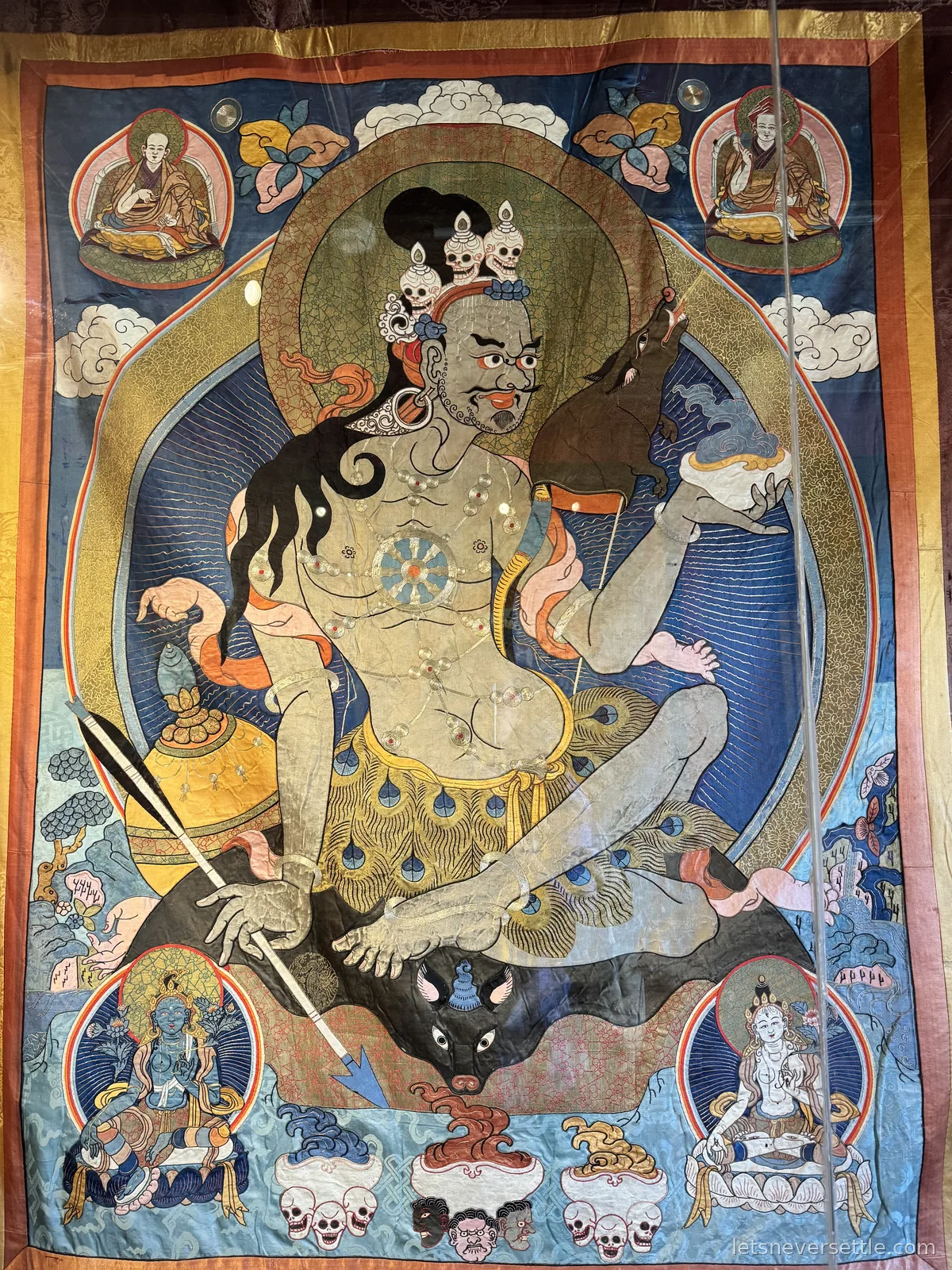
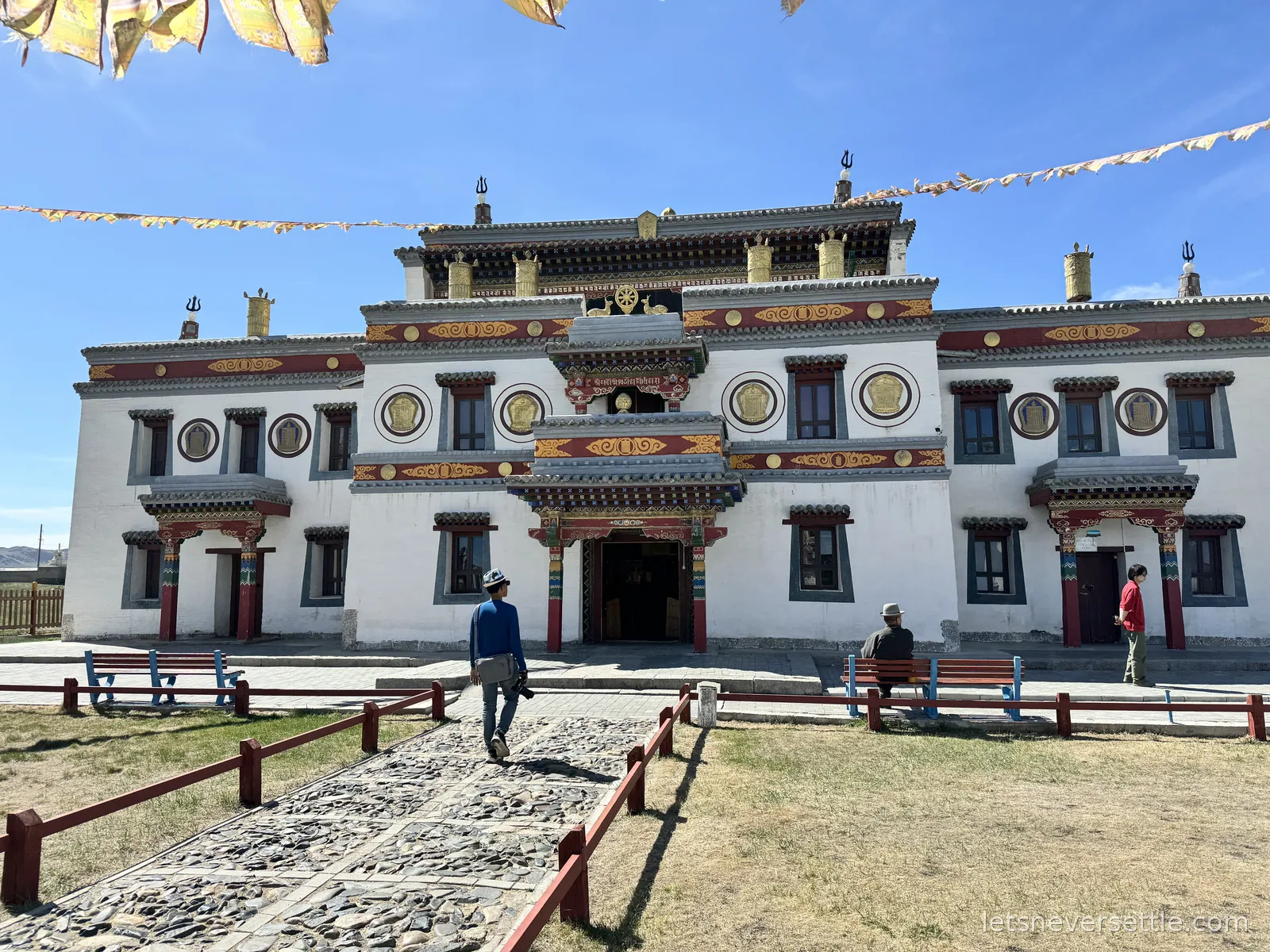
Inside the Erdene Zuu grounds in May 2024. Most of the compound is open space now; the temples that survived stand in a cluster behind us.Inside one of the temple halls: a gilded Buddha in yellow silk, ringed by a carved golden halo, with cases of small offering statues either side.An embroidered silk thangka of a protector deity, every skull and flame stitched by hand.Strings of prayer flags lead the way to the white Tibetan-style temple. Dileep, camera in hand, walked every path in the compound.
Erdene Zuu is the survivor that makes the trip. Pair the history with the drive itself, and a night in a ger on the steppe on the way.