
Malaysia is the place to eat durian, and it is not close. Thailand exports more, but Thai durian is usually cut before it is ripe so it survives the journey. In Malaysia the fruit is left to fall.
The farm we queued at for nothing
Our friend Eddie in Johor knows how much Inga loves durian, so he arranged a visit to an organic durian farm. We got there at ten on a Saturday morning and found a queue, which should have been the first clue, along with the coaches parked up nearby. We stood in it for an hour behind buyers from Singapore and China who were ready to pay serious money, then gave up in the heat and left without eating any durian at all.
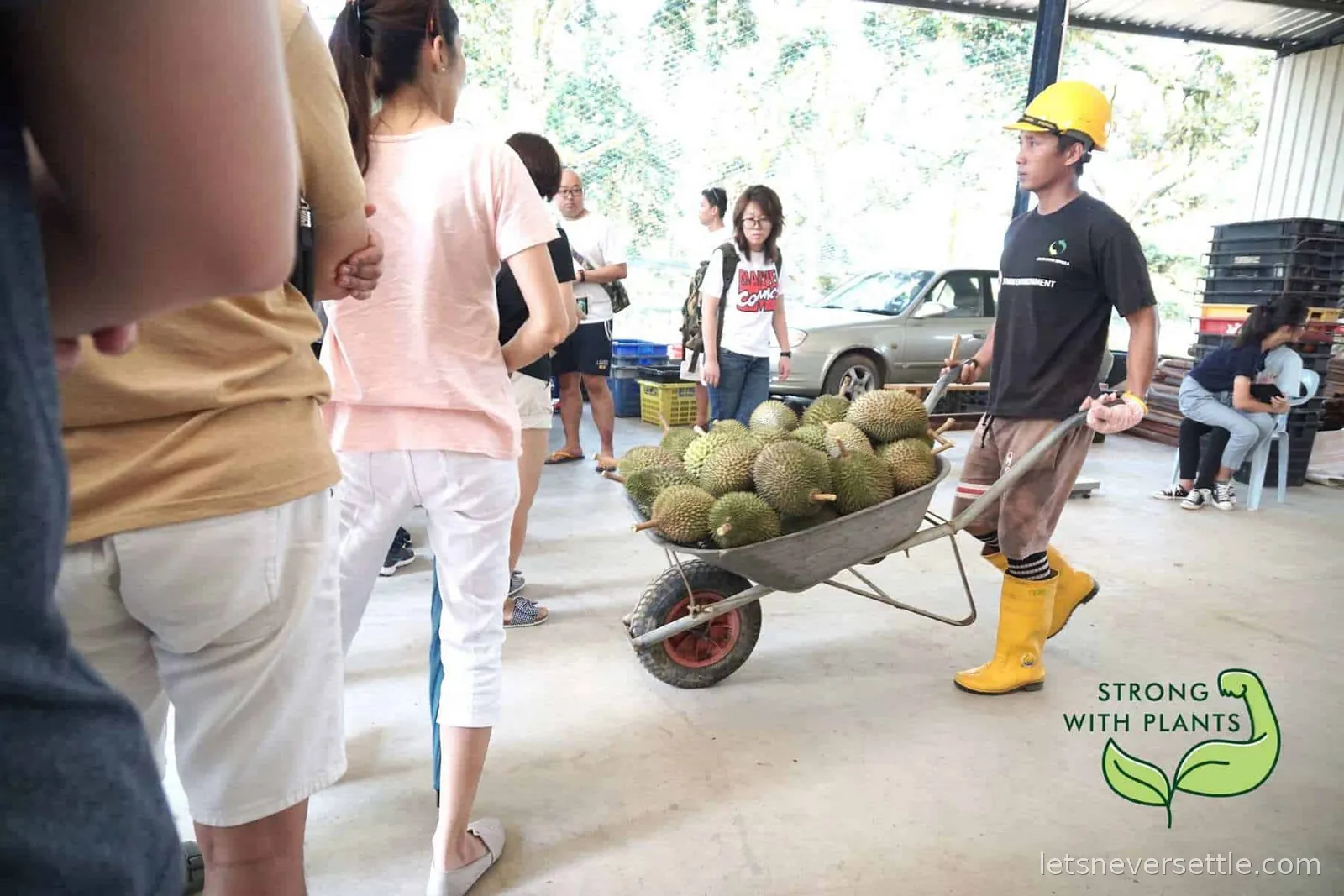
Worth it anyway, because the farmer told us how it works. Durian is never picked. It ripens on the tree and falls, into nets strung between the trunks, and only fallen fruit is sold. Pulling one off by hand is not done, because you cannot tell from the outside whether it is ready.
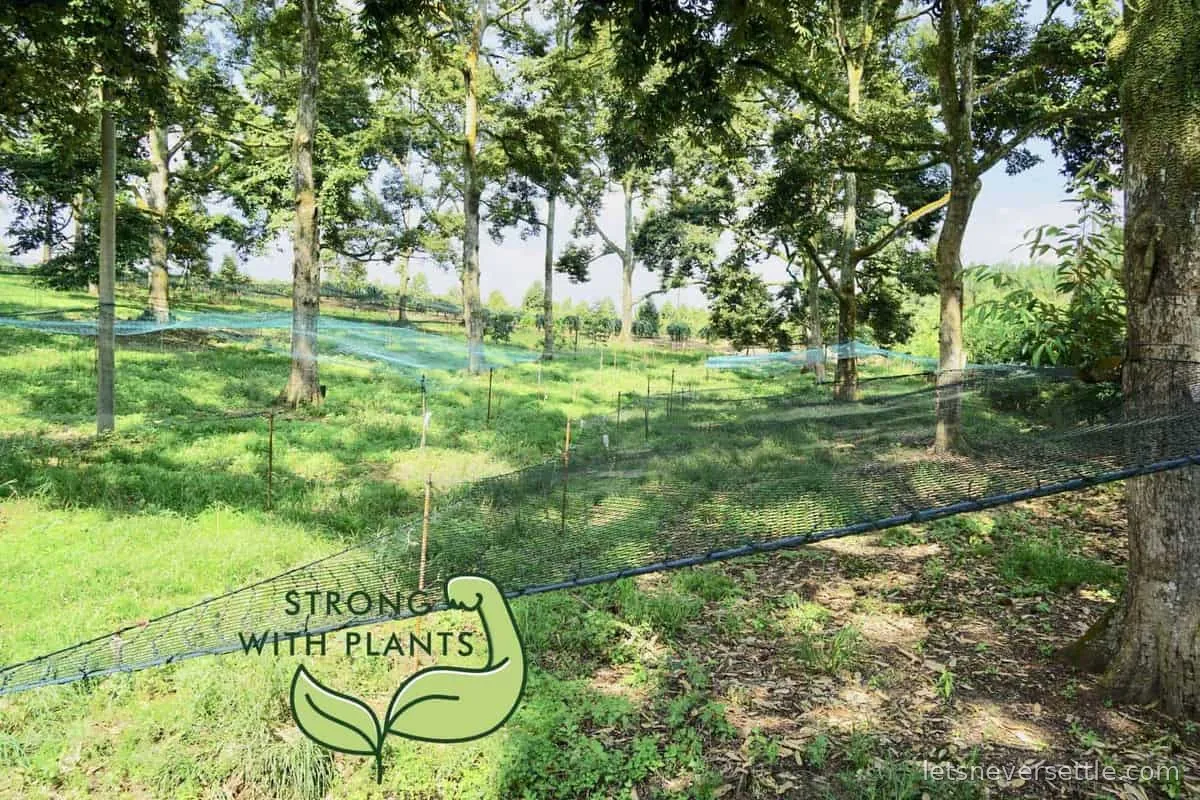
Go at seven, on a weekday
That is the whole trick, and it is the one thing we would do differently. Fruit falls overnight, so the best of it is on the table first thing. By mid morning at a weekend you are queueing behind coach parties for what is left.
What the numbers mean
Malaysian durian varieties carry a D number, a registration code rather than a grade. Here are the ones you will actually meet.
- Musang King (D197), the premium one and priced accordingly. Deep yellow, thick, bitter-sweet and intense.
- Black Thorn (D200), the other contender for the top spot. Creamy and sweeter, with a small seed and a lot of flesh.
- Red Prawn (D175), orange-fleshed, sweet and wet rather than bitter. A good first durian.
- D24, the old standard before Musang King took over. Balanced, slightly bitter, still excellent and much cheaper.
- Golden Phoenix (D198), pale, wet and sharply bitter. Divisive even among people who like durian.
- Green Skin (D145) and Kampung (D114), the everyday ones, and the kampung is whatever the village tree gave you.
- Sunset (D18), XO, D101 and F1, the ones you will meet if you keep going.
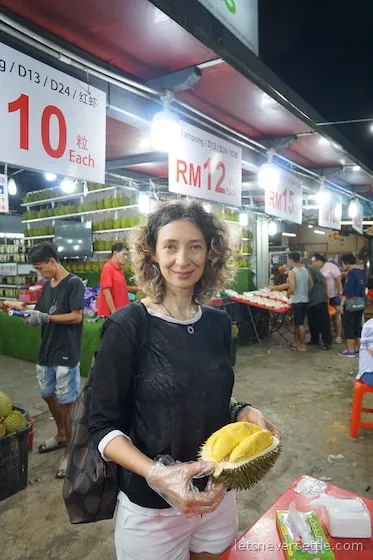

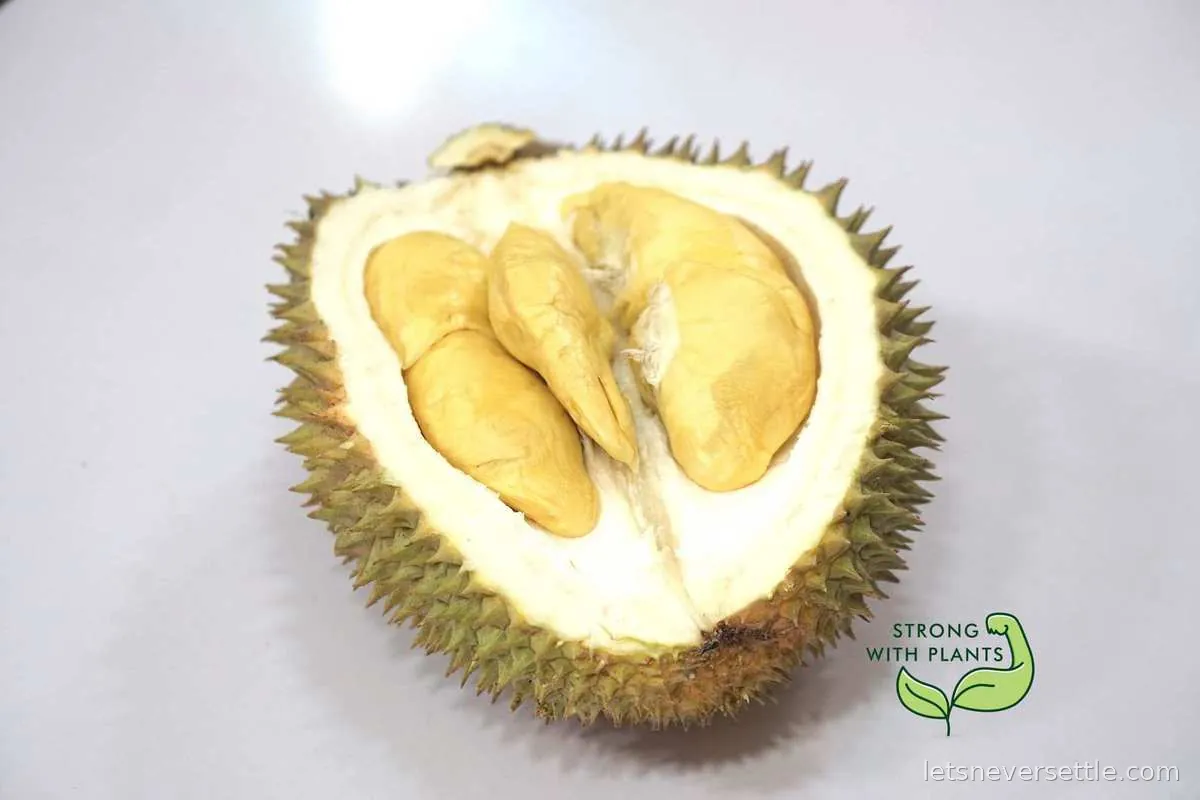
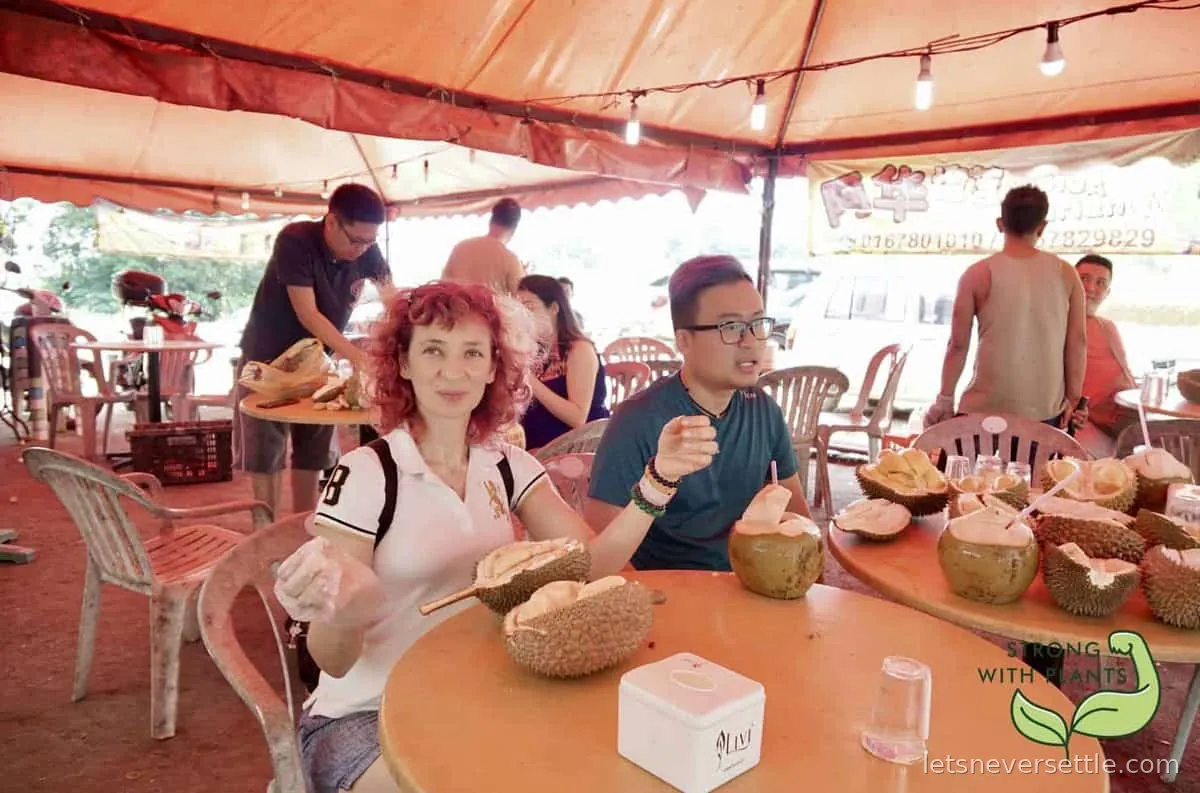
Picking a good one
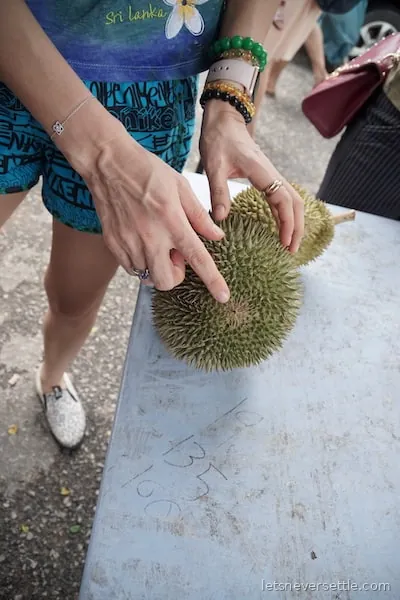
Ask the seller to knock it. A dull, hollow sound means the flesh has come away from the shell, which is what you want. Ringing and solid means it is not ready. Smell the stem end, which should be strong rather than sour, and look at the stem itself: fresh and slightly damp is good, dry and shrivelled means it fell days ago.
A word on the season
Durian has a short season and Malaysia treats it as an event. There are festivals, and families go out at night specifically to eat it. Locals will tell you it has a warming effect on the body, which is why nobody drinks alcohol alongside it.
More from the country is in everywhere we have been in Malaysia, including Johor Bahru just down the road from the farm.