
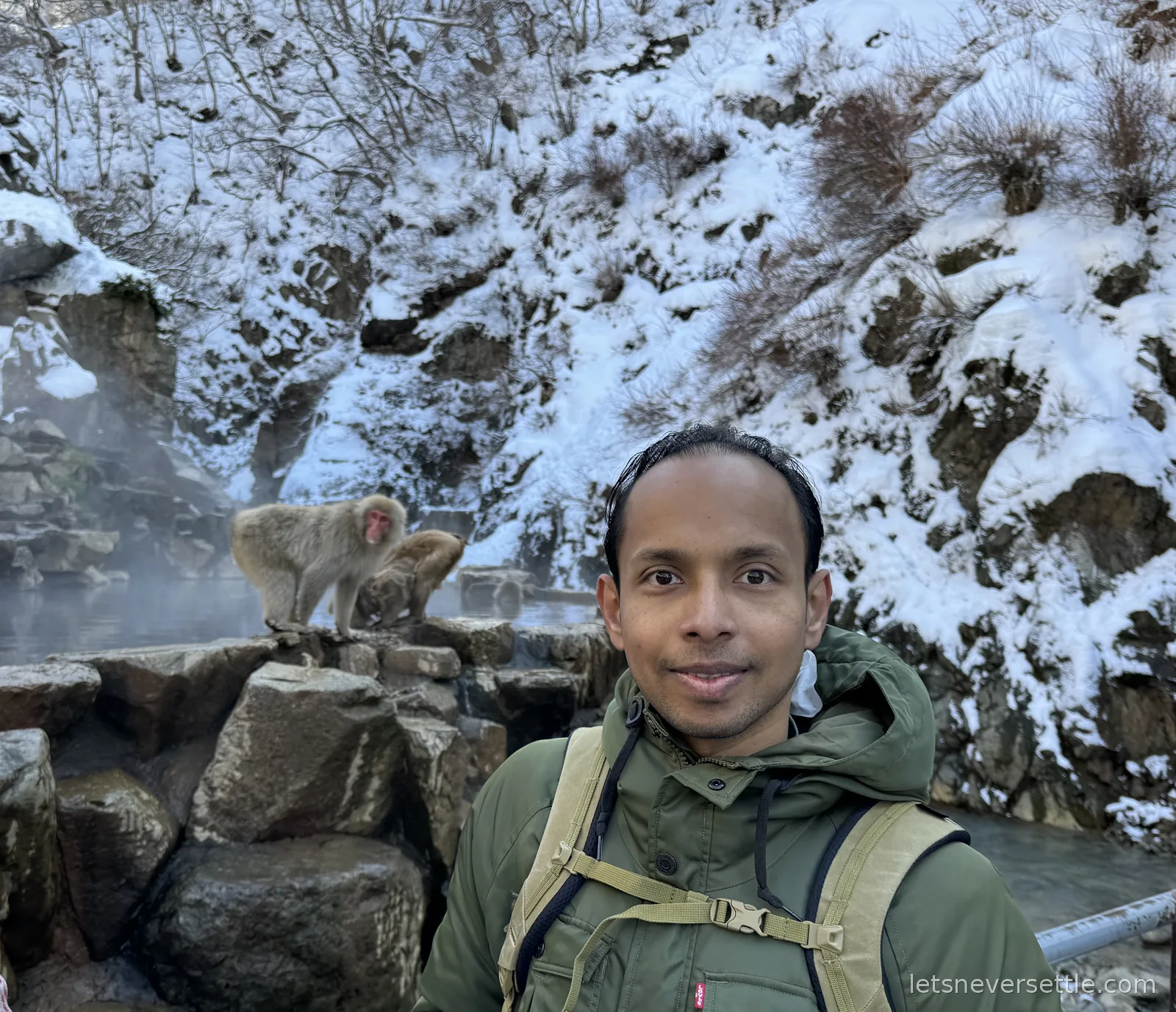
In February 2024 we took a winter detour from Tokyo up into the mountains of Nagano, to visit the only monkeys on earth famous for having their own onsen. Jigokudani means "hell valley", which felt dramatic until we saw the steam coming out of the frozen gorge and understood the name completely.
We skipped the guided tours. The plan was to turn up, stay as long as we felt like it, and if the monkeys didn’t show, go and sit in an onsen ourselves at Yudanaka or Shibu and try again the next morning.
Getting there from Tokyo
It’s doable in a day, just about, and it’s two legs.
The first is the Hokuriku Shinkansen from Tokyo Station. We took the Kagayaki service, which does Tokyo to Nagano in an hour and a half and cost us around JPY 8,500 one way. It’s reservation only, so book the seat. Hakutaka and Asama run the same line and stop more often. The whole line is covered by the JR Pass, the JR East Pass and the JR Hokuriku Arch Pass, but if the monkeys are the only thing taking you out of Tokyo, a plain return ticket works out cheaper than a pass.
The second leg is the Nagaden Express bus from stop 23 at Nagano Station’s east exit, 45 to 50 minutes, 1,800 yen. The JR Pass doesn’t cover it. It drops you at the Snow Monkey Park stop by the Roman Museum car park.
The walk in
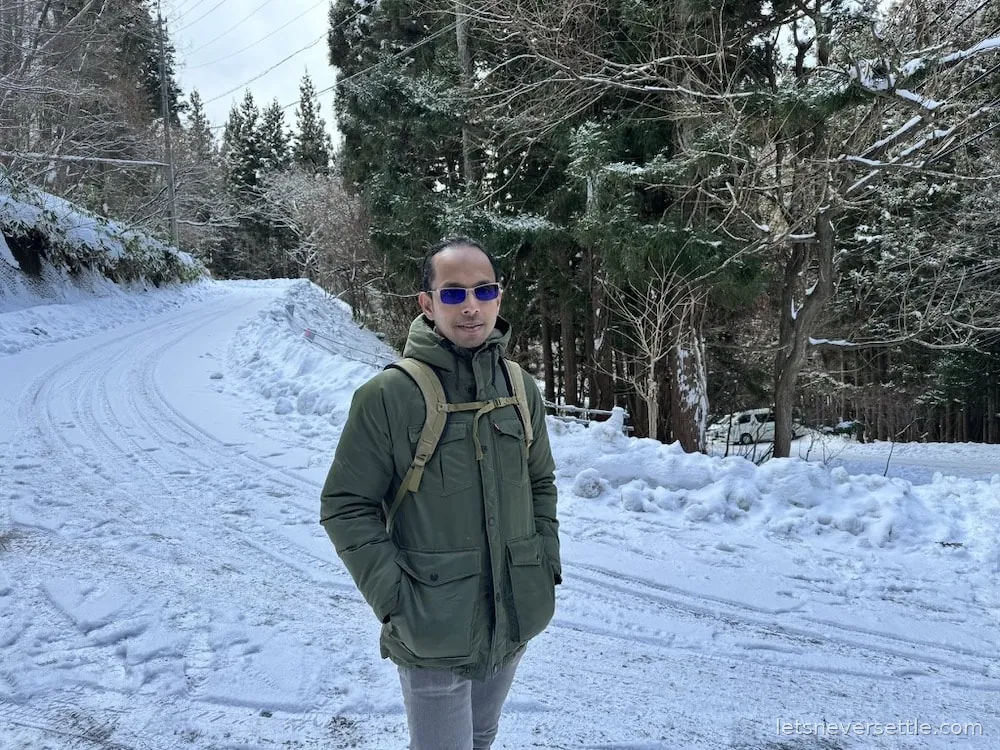
From the car park it’s about 2km through pine forest to the ticket office and the onsen, and it takes roughly half an hour. There are a few steps, but it’s mostly flat with a gentle climb. Wear proper boots: the path gets slippery where the snow has been walked on and refrozen.
The park
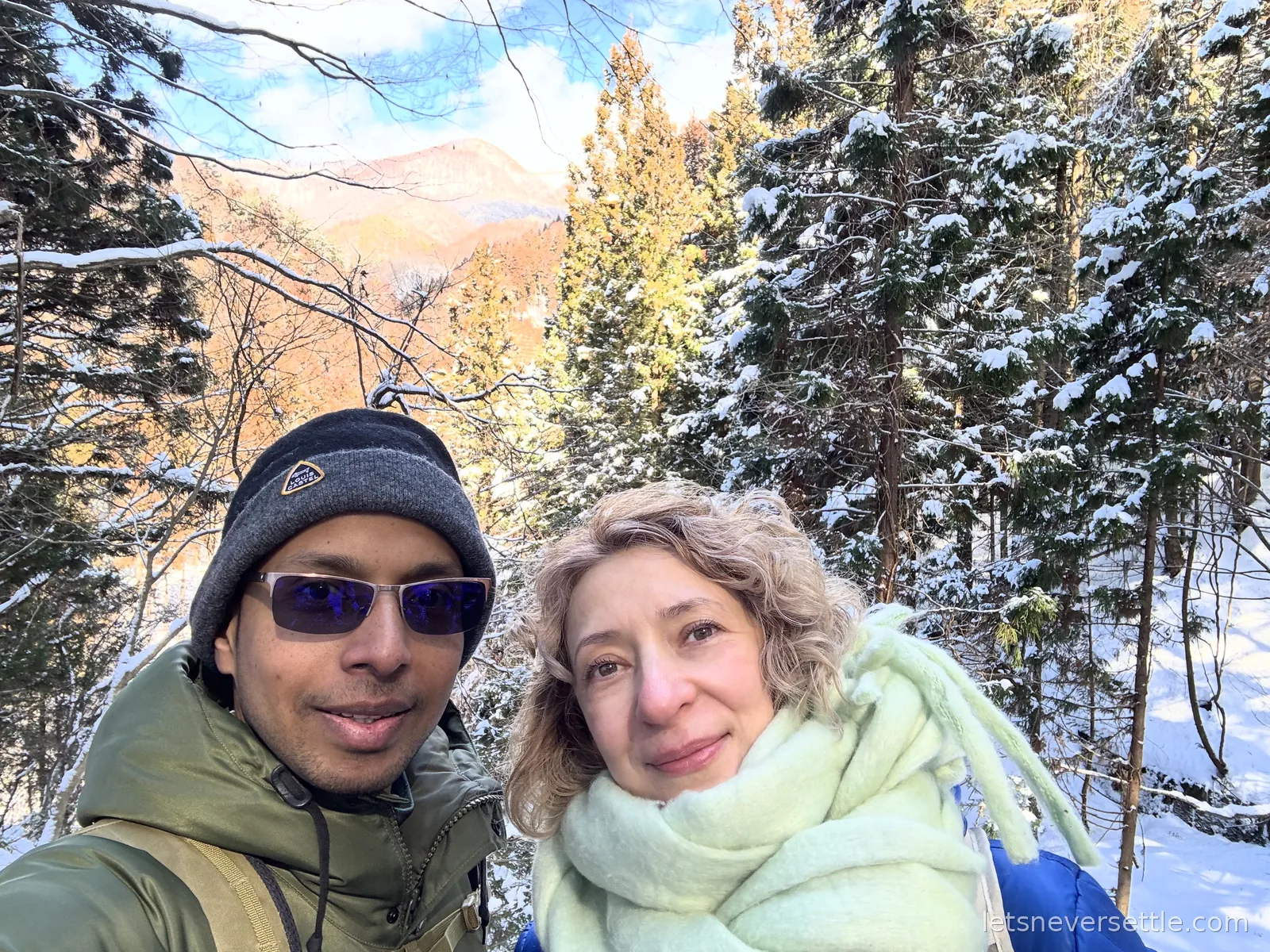
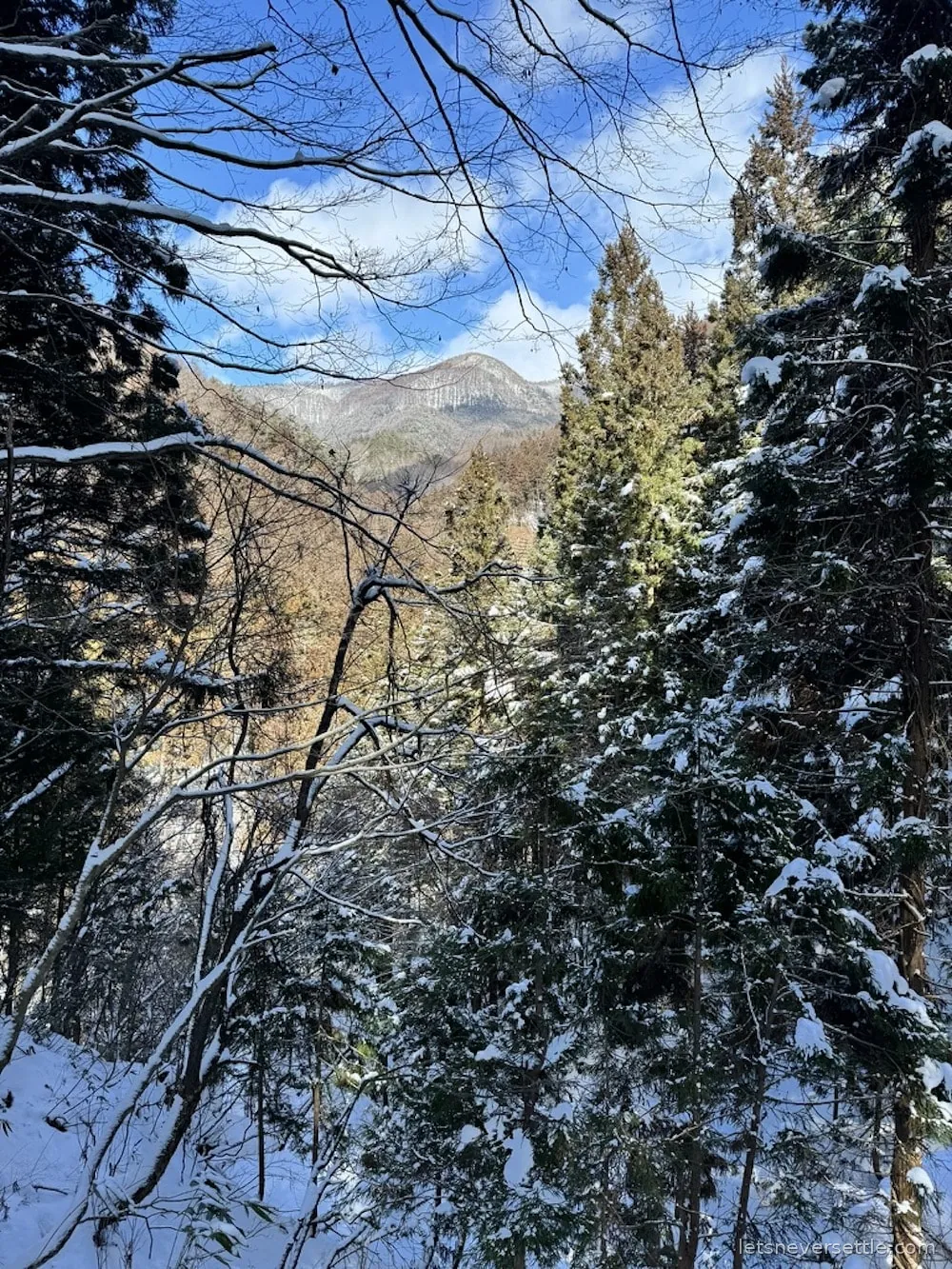
Jigokudani Monkey Park sits at the bottom of Joshinetsu Kogen National Park and it’s open all year. It was set up in 1964, after ski resort building pushed the macaques into the local towns where they were treated as pests. The name comes from the geothermal steam that comes up out of the valley floor.
Tickets are same-day only, sold at the office at the end of the forest walk, and the queue builds from mid-morning. When we went in February 2024 it was 800 yen for adults and 400 for children. There are lockers, an information centre and toilets by the ticket office. No food inside the park, so the monkeys stay wild and stay off you.
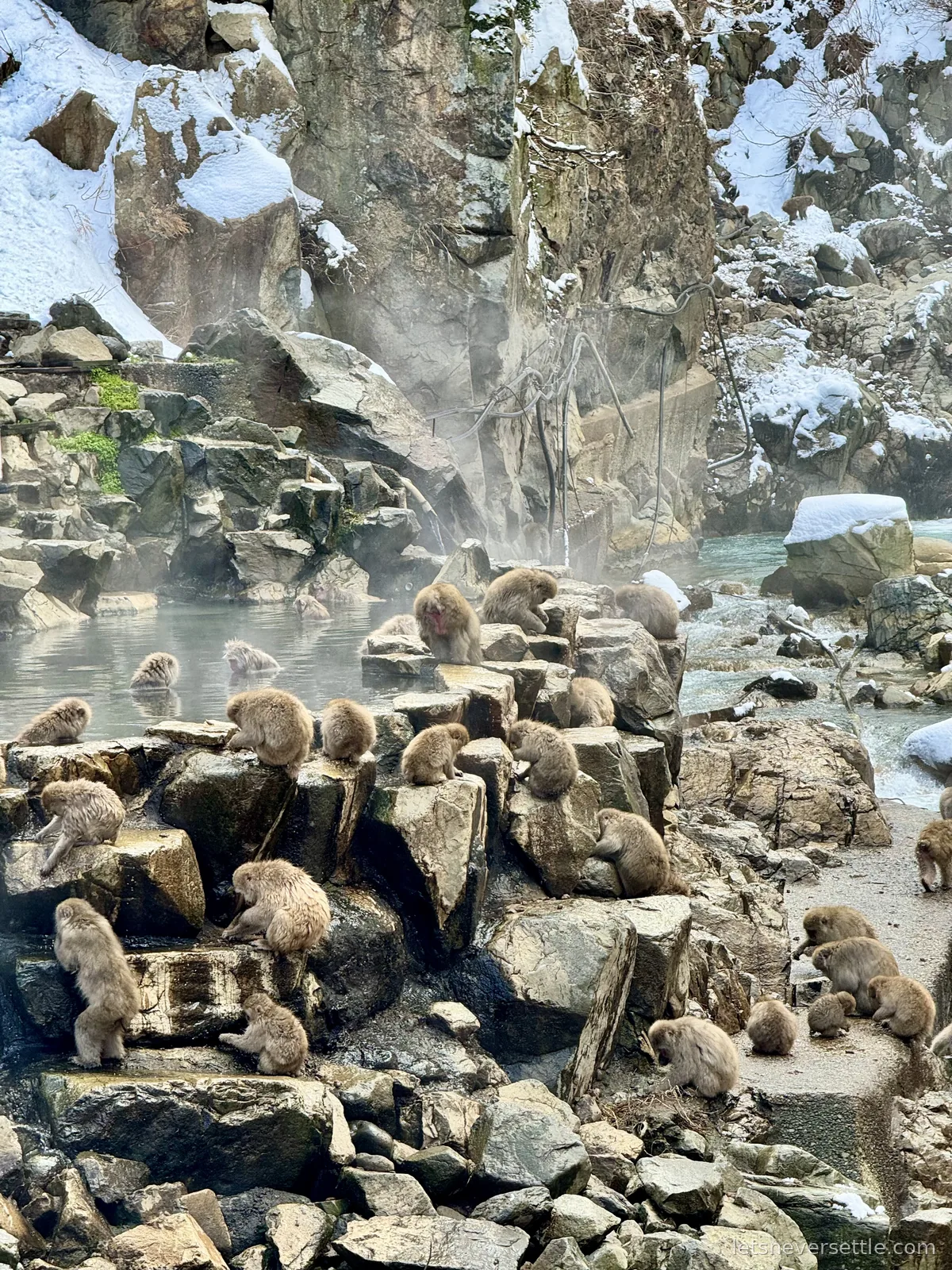
The monkeys
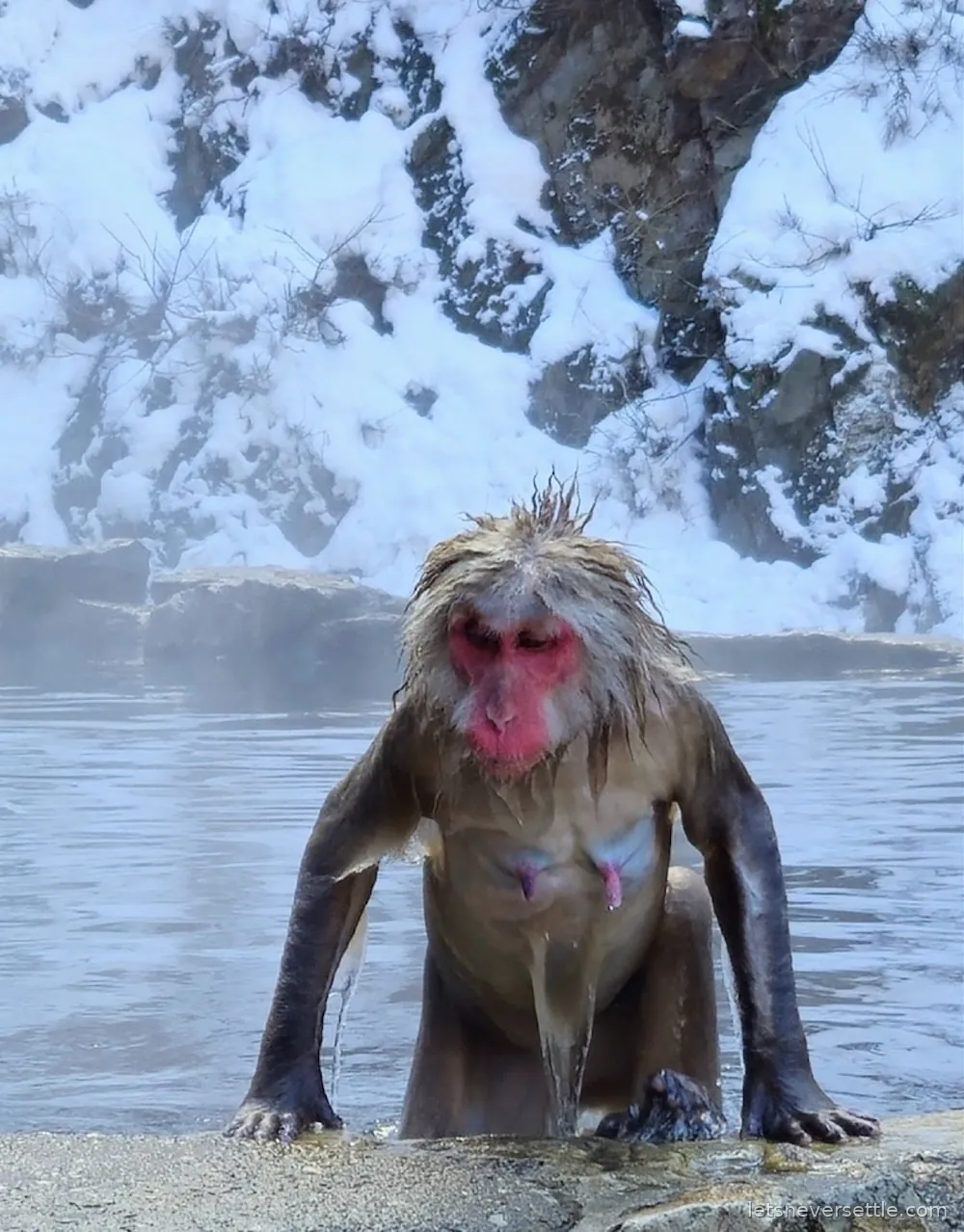
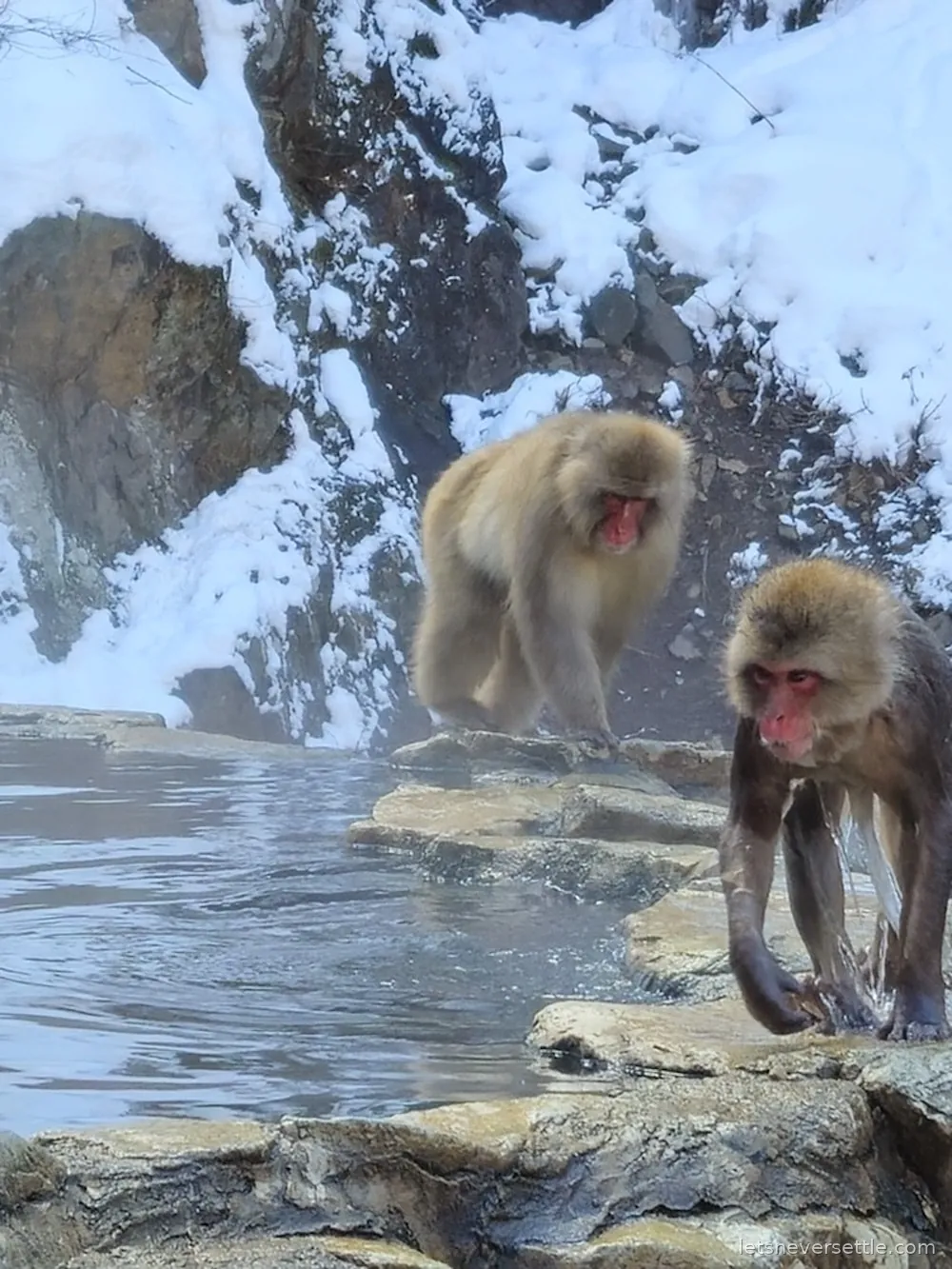
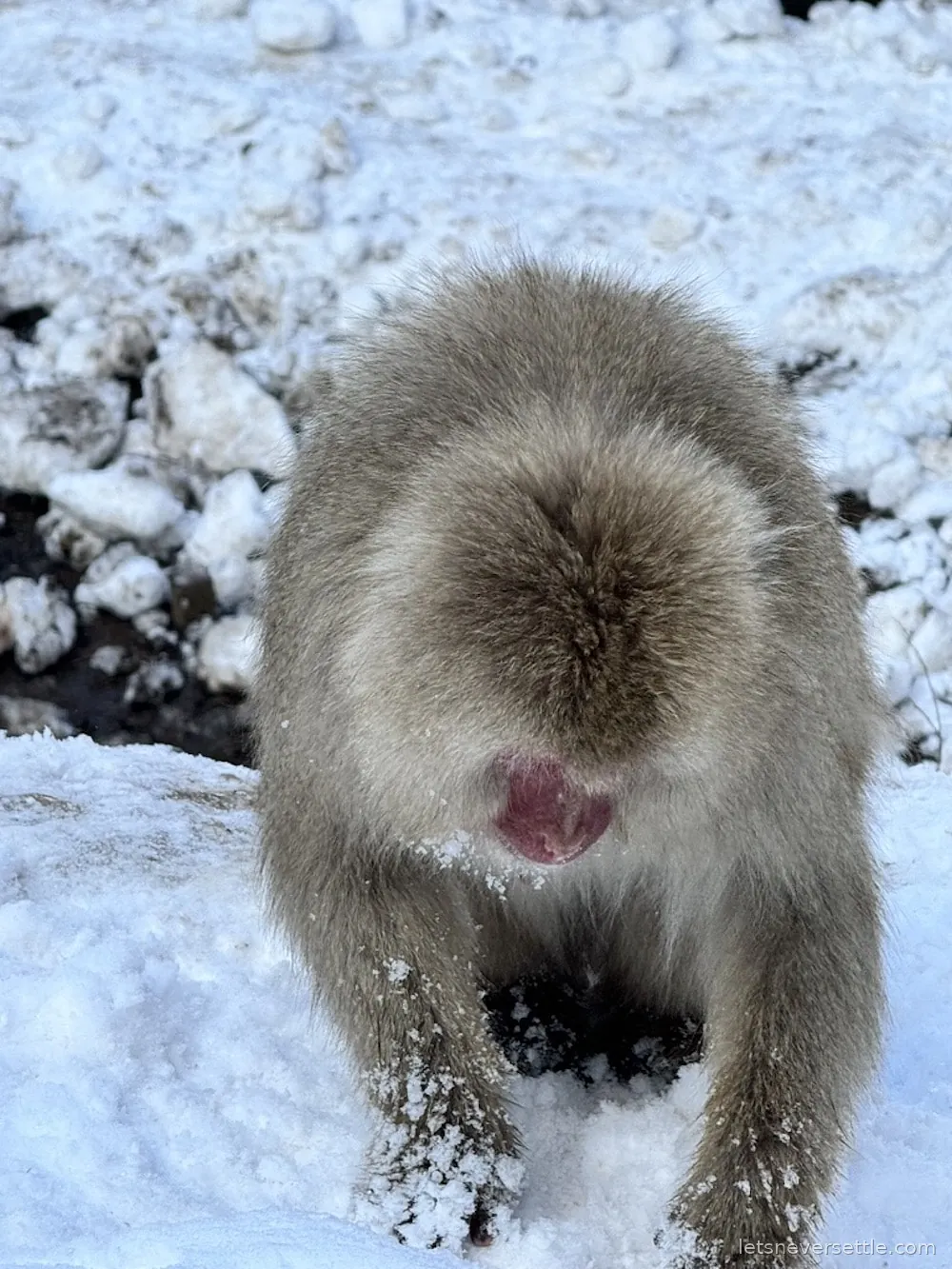
They come down off the mountain for the hot water, and once they’re in, they’re in. Grooming, arguing, dozing, climbing out to shake and getting straight back in. You can stand a metre away, and you’re asked not to touch them, which is easy because they aren’t remotely interested in you.
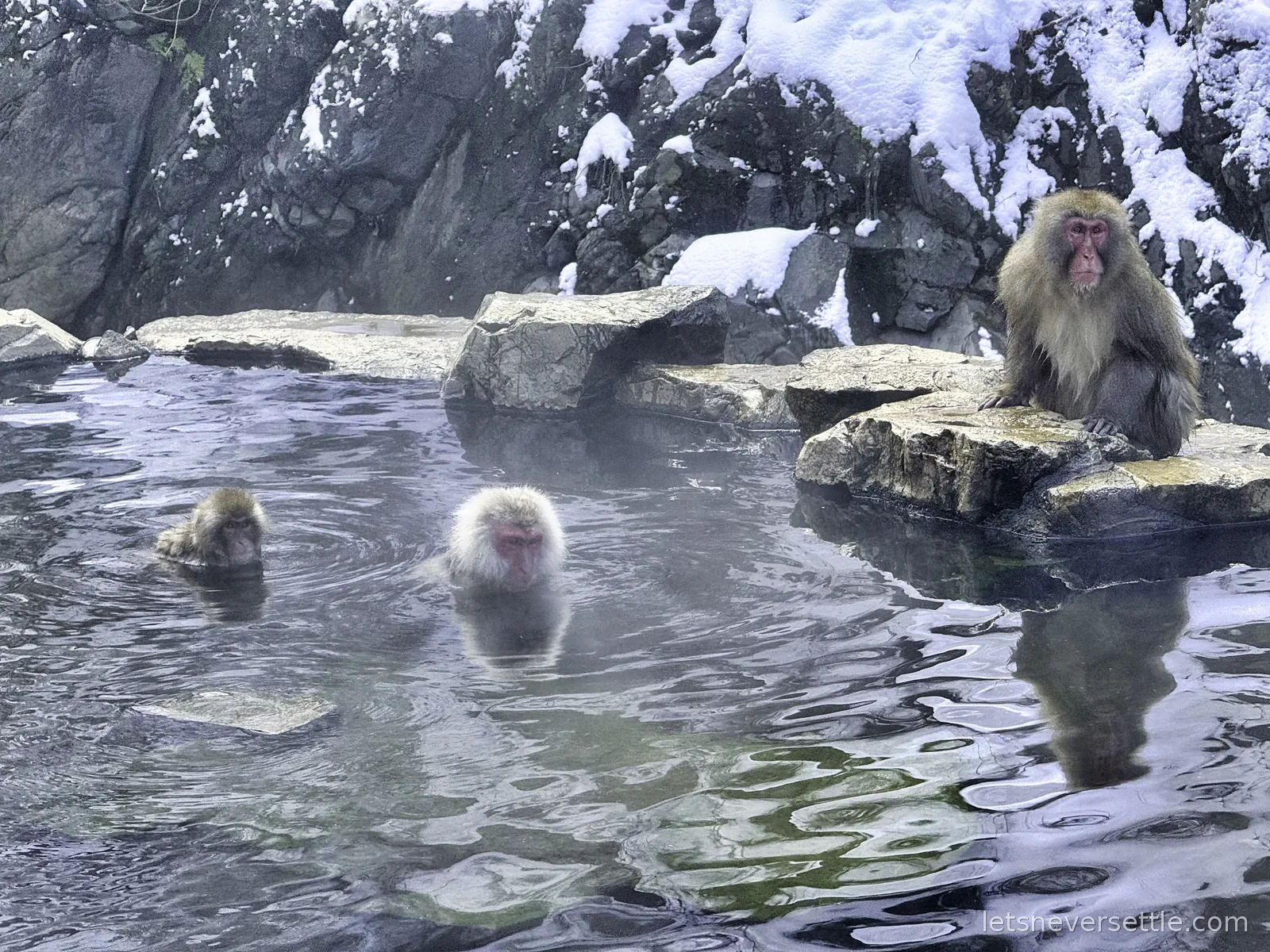
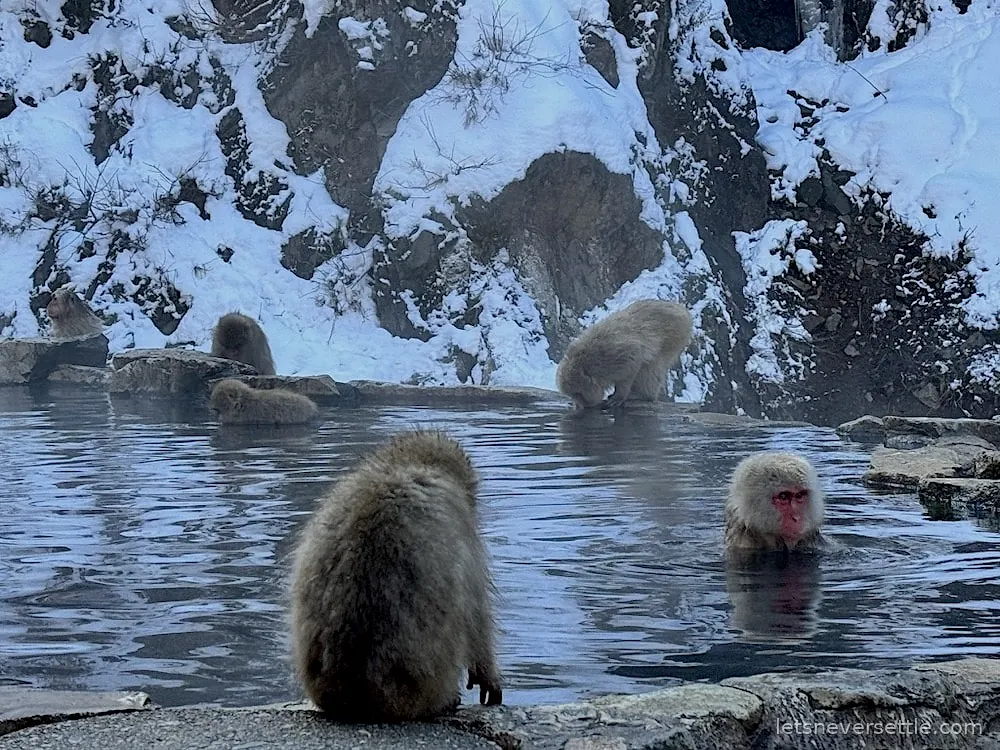
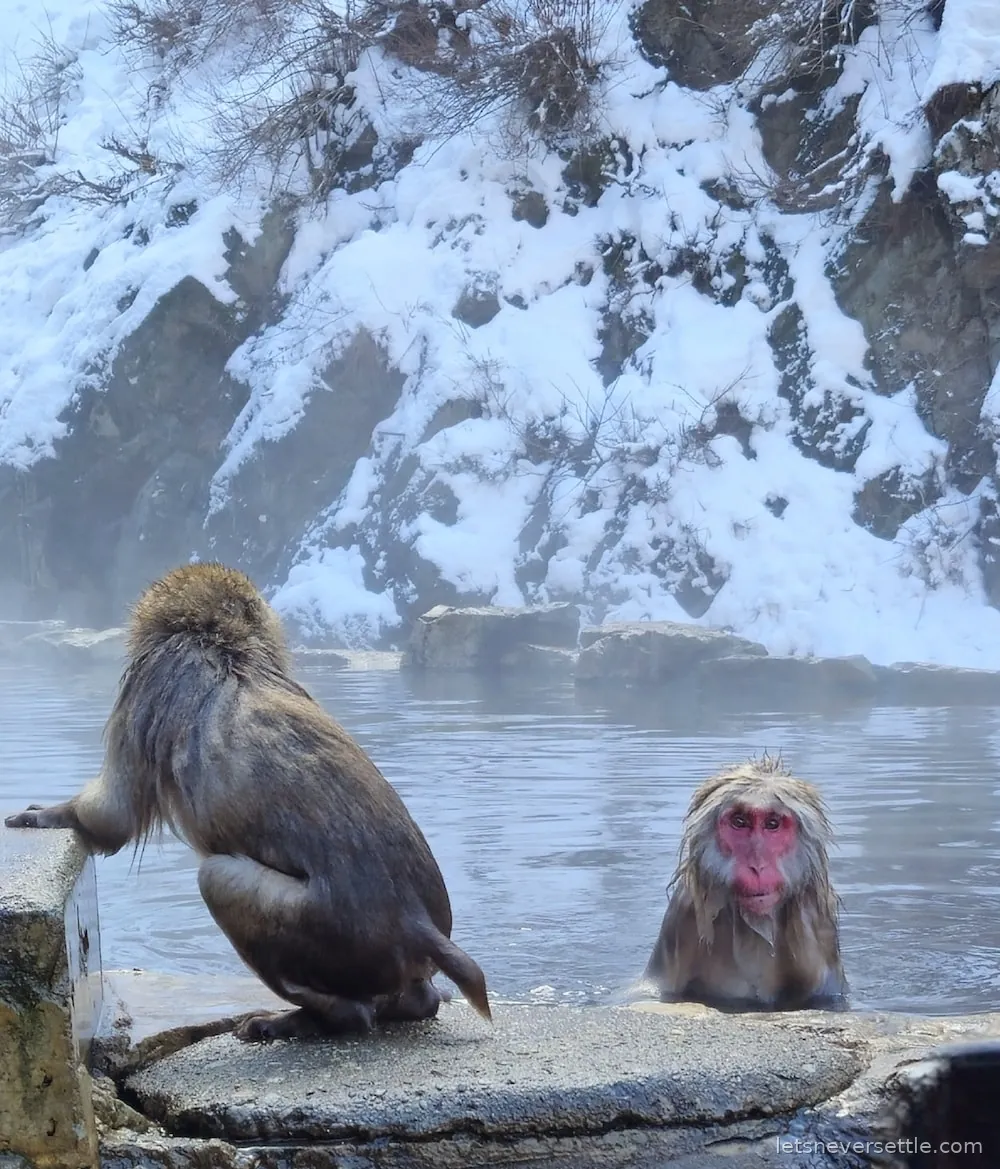
When to go
The park is open year round, but the monkeys use the hot spring most on cold mornings, so late December to March is the window if you want them in the snow. Winter opening is 9am. We arrived at 10 and by noon the place was busy, so go early: it’s a completely different experience with twenty people there instead of two hundred.
It’s a long day out from Tokyo by train and bus, and worth every minute. For the rest of that trip, start with our Tokyo post, and if you want Japanese animals with better manners, the deer at Nara bow before they mug you.