
The first thing in Almaty that properly stopped us, and the one we have gone back to on every visit since.
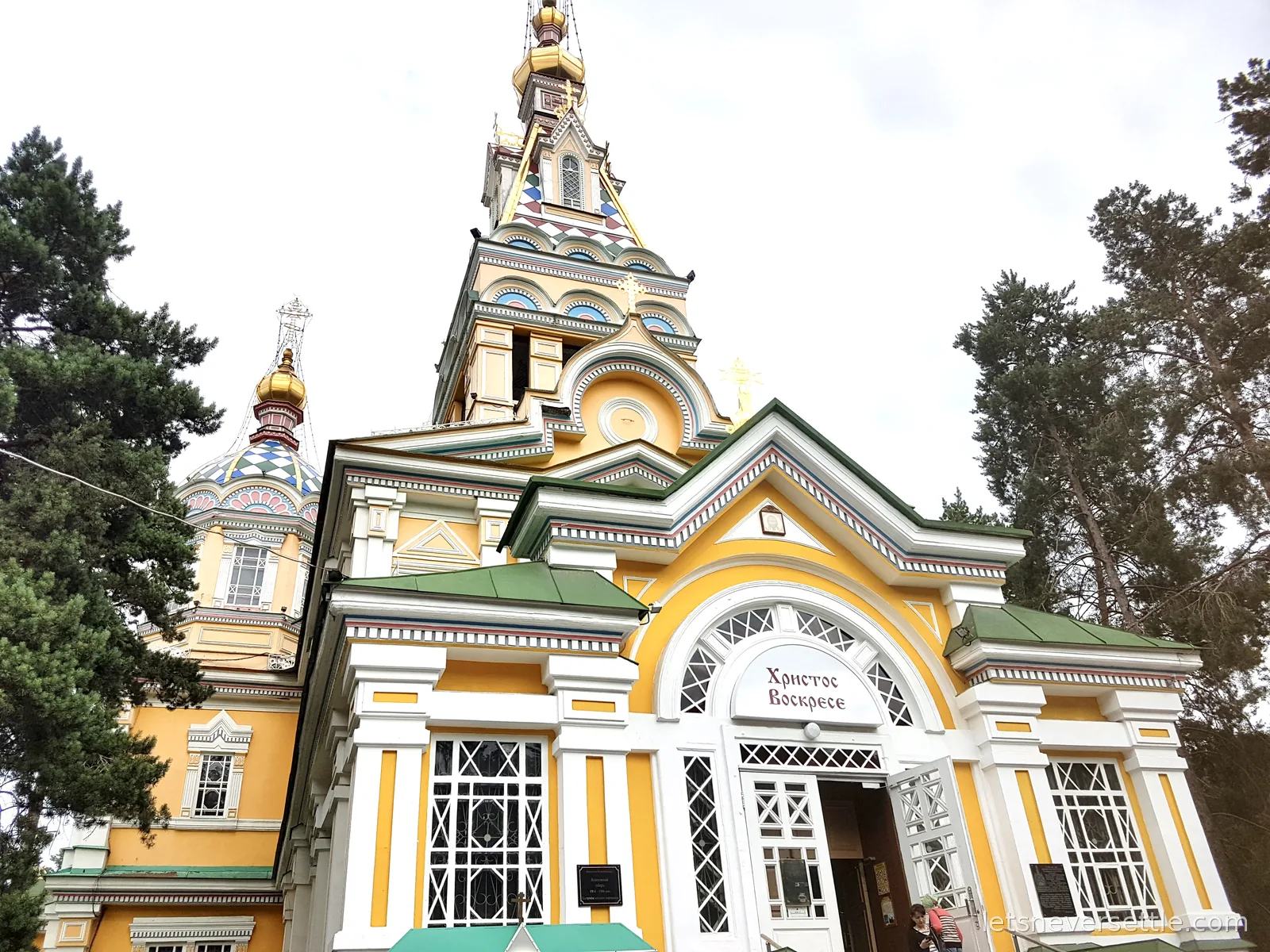
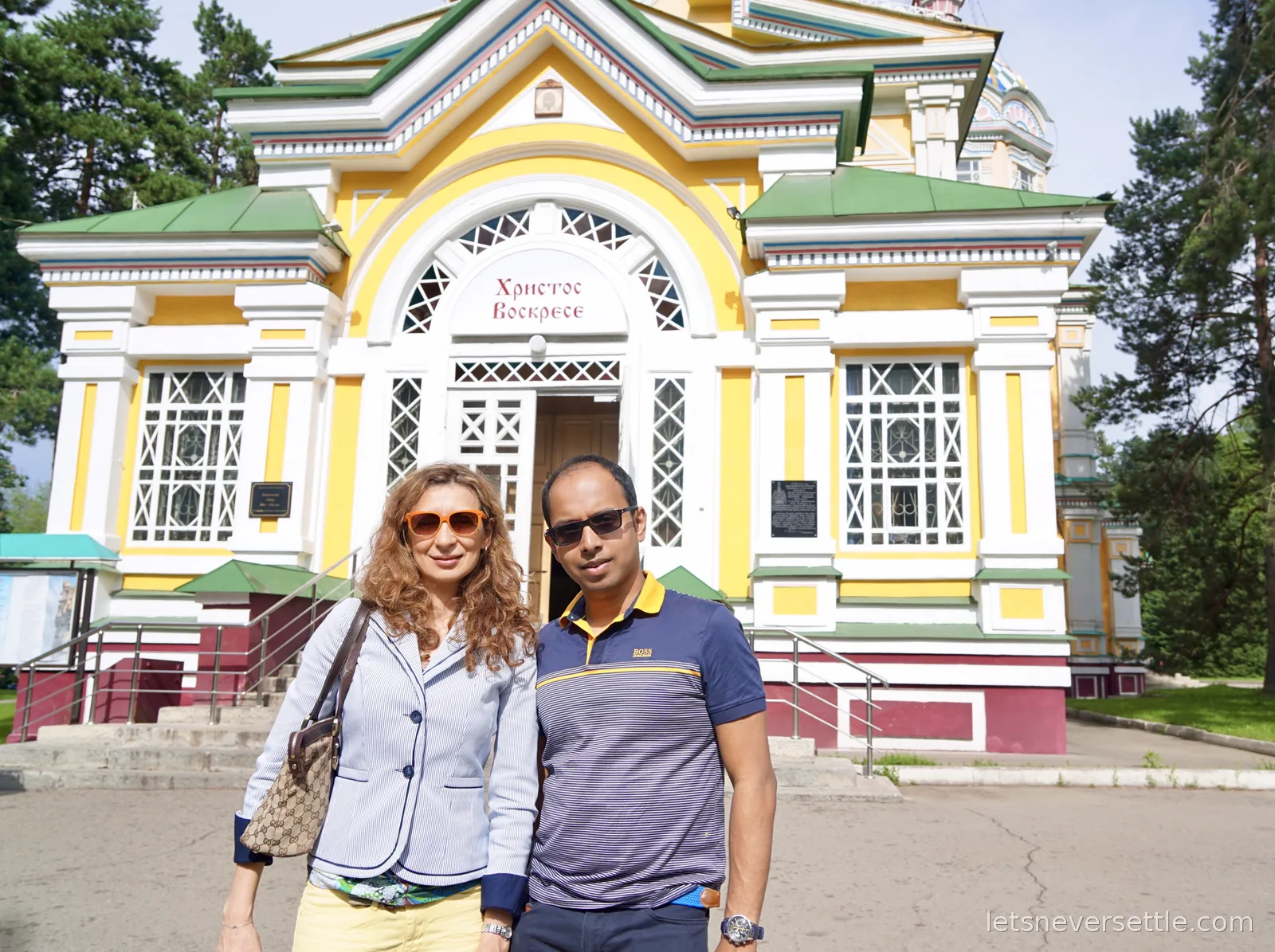
The first thing that properly stopped us was the Ascension Cathedral in Panfilov Park: a tiered wooden wedding cake in yellow, white and green, domes stacked on domes.
What the cathedral actually is
Its proper name is the Ascension Cathedral, though almost nobody calls it that. It stands among the trees in the Park of 28 Panfilov Guardsmen, on Gogol Street, and it went up between 1904 and 1907, back when Almaty was still called Verny. Konstantin Borisoglebsky drew the original design. The engineer Andrei Zenkov supervised the build and adapted it to survive the earthquakes this city gets, which is why everyone now uses his name for it rather than the one on the paperwork.
It is built almost entirely of timber, on a reinforced foundation, with interlocking logs and metal ties holding it together. You will hear that it contains not a single nail. That one is a myth, and a stubborn one: bolts, braces and other metal connections were used quite deliberately, and they are part of why it is still standing. The bell tower runs to roughly 46 metres and the building holds somewhere around 1,800 people.
The earthquake that proved it
The engineering got its test in 1911, when an earthquake flattened much of the city. The cathedral came through with relatively minor damage, because the timber frame could move instead of snapping. Zenkov is said to have described it swaying like the top of a tall tree in the wind.
What happened to it under the Soviets
It stopped working as a church, and from 1929 it housed the Central State Museum of the Kazakh ASSR. The bell tower did a stint as a transmitter for some of Almaty's earliest radio broadcasts. It went back to the Russian Orthodox Church in 1995 and now holds services every day. You can read the cathedral's own account of all this on its official history page, in Russian.
Going inside
The thing to look for is the painted iconostasis, which is enormous, and the way the richness of the interior sits against all that plain timber holding it up. Some of the icons are associated with the painter Nikolai Khludov. It is a working church rather than a monument, so dress respectfully, keep your voice down, and ask before you photograph anyone at prayer.
What else is in walking distance
The park itself is worth the time, and everything below is a short walk from the cathedral doors:
- The Memorial of Glory and the Eternal Flame, in the same park
- The Green Bazaar, which we got to later the same day
- The Arbat and the Zhibek Zholy pedestrian street
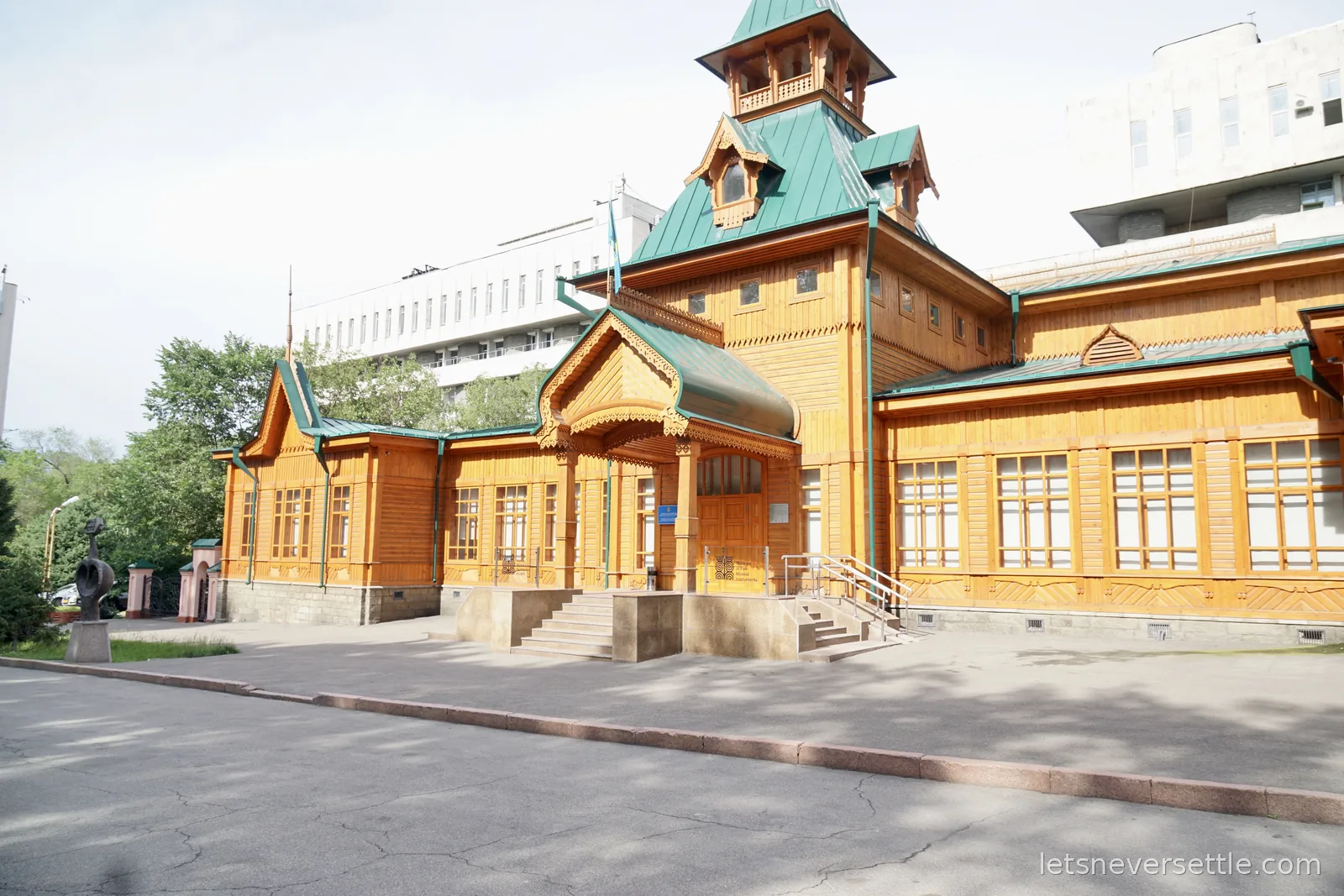
And in the same park, a few minutes from the cathedral, stands another timber showpiece: the Museum of Kazakh Folk Musical Instruments, all honeyed wood and green roofs.
More from this city in our three Almaty trips.