Silchester in Hampshire, May 2012: walking the Roman walls of Calleva Atrebatum, the North Gate, St Mary's church and meadows full of dandelion clocks.
Silchester in Hampshire is a field with a secret. Under the grass sits Calleva Atrebatum, a whole Roman town, and around it still runs a near-complete circuit of walls. We walked it on a hot day in May 2012 and mostly had it to ourselves, sheep excepted.
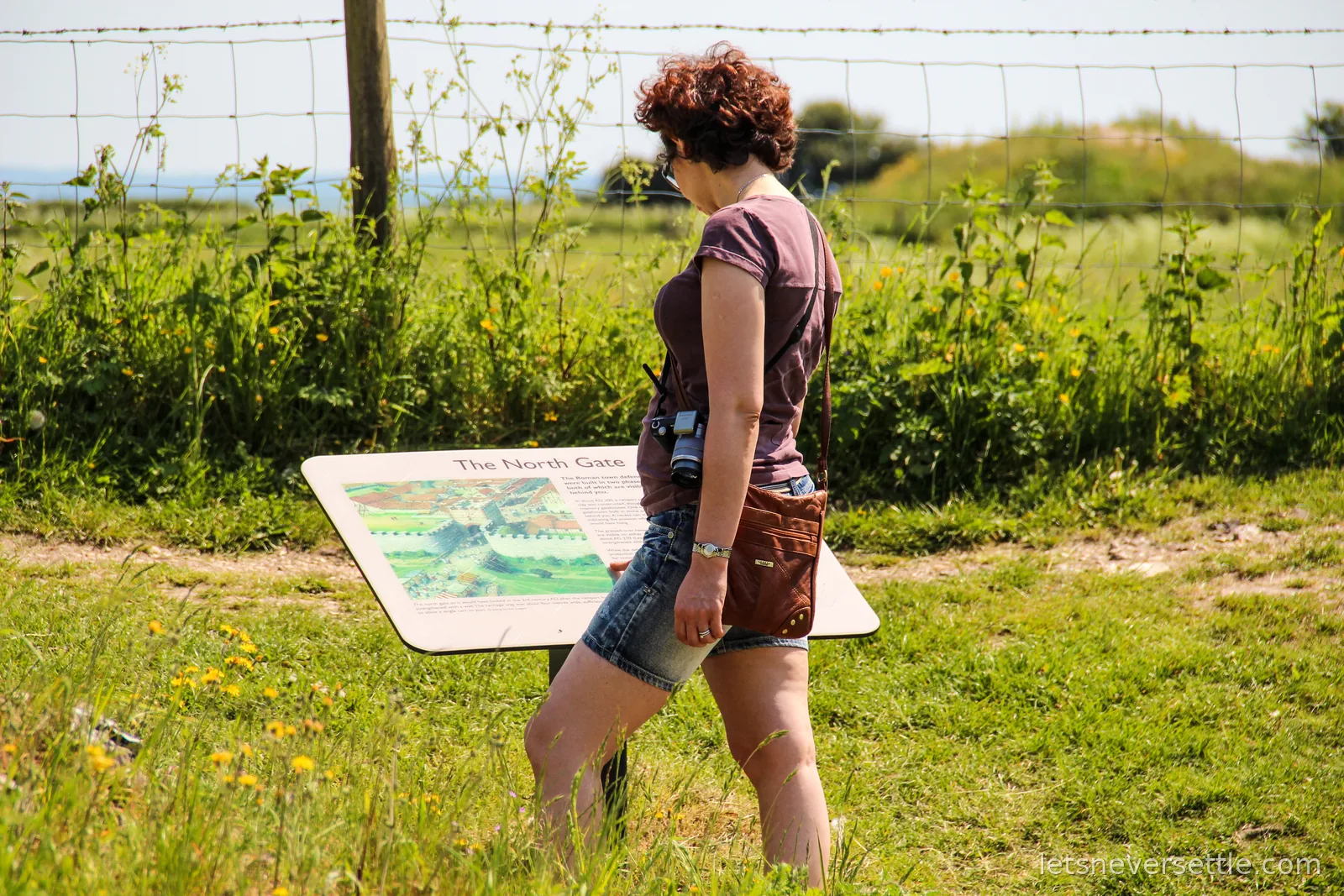
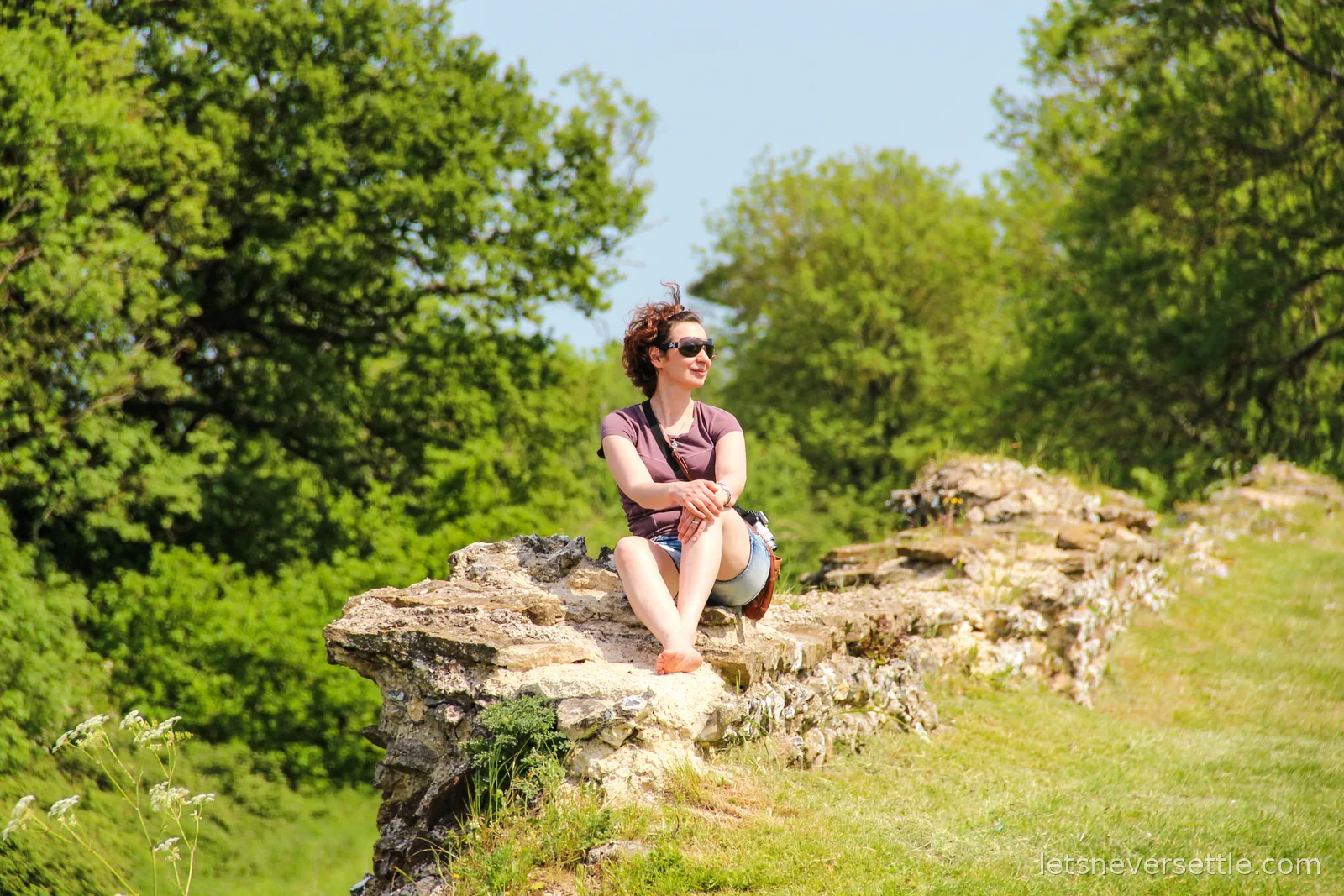
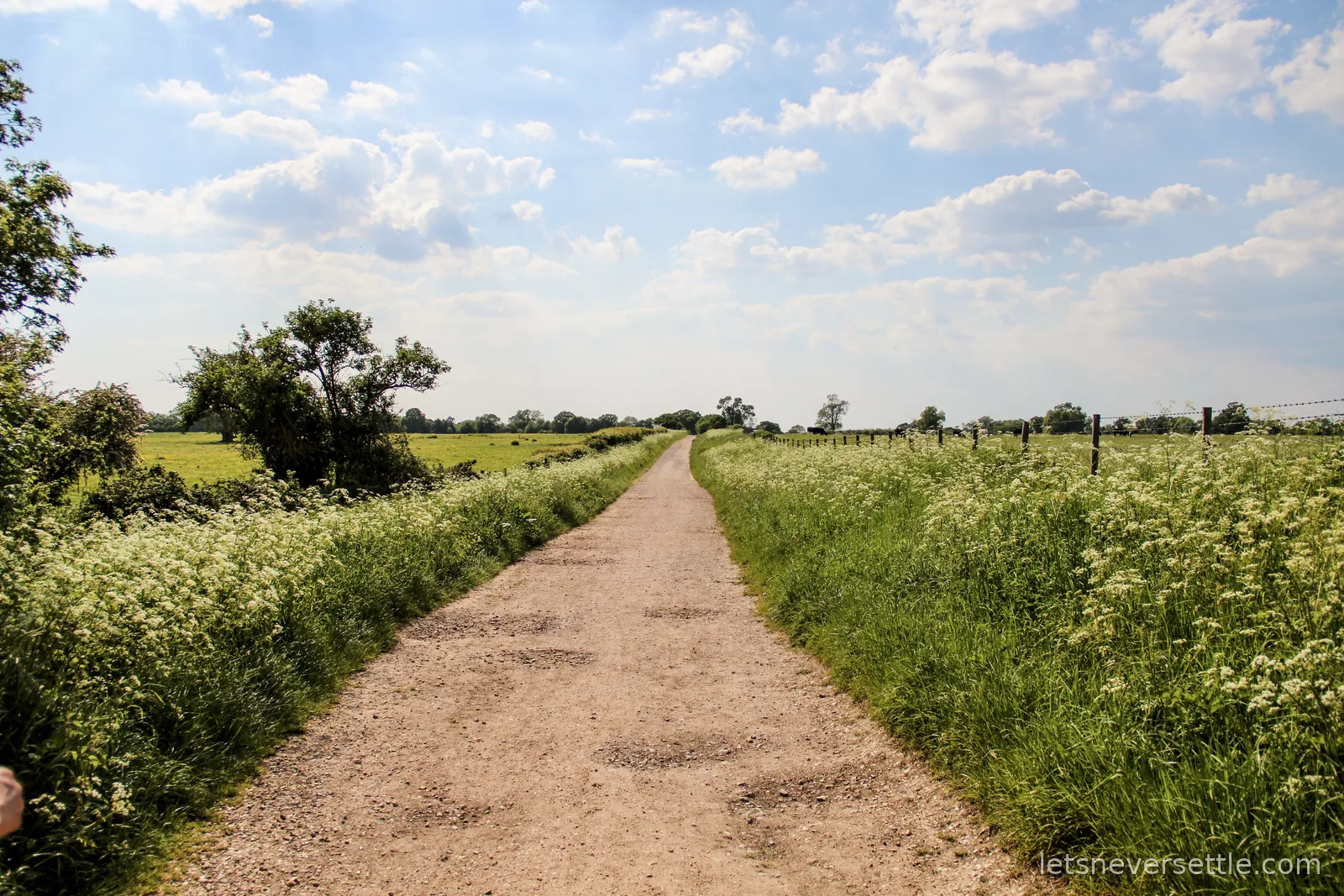
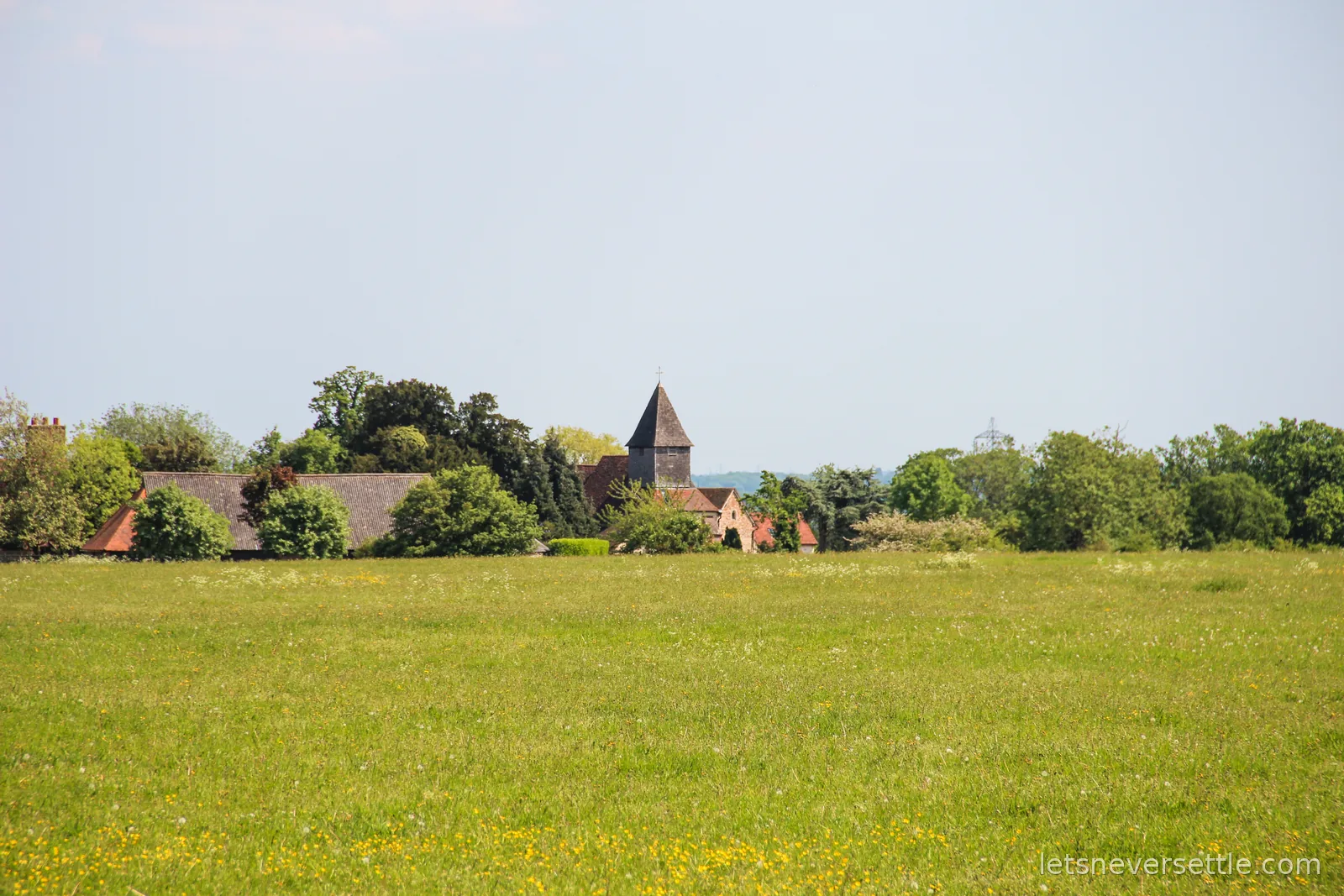
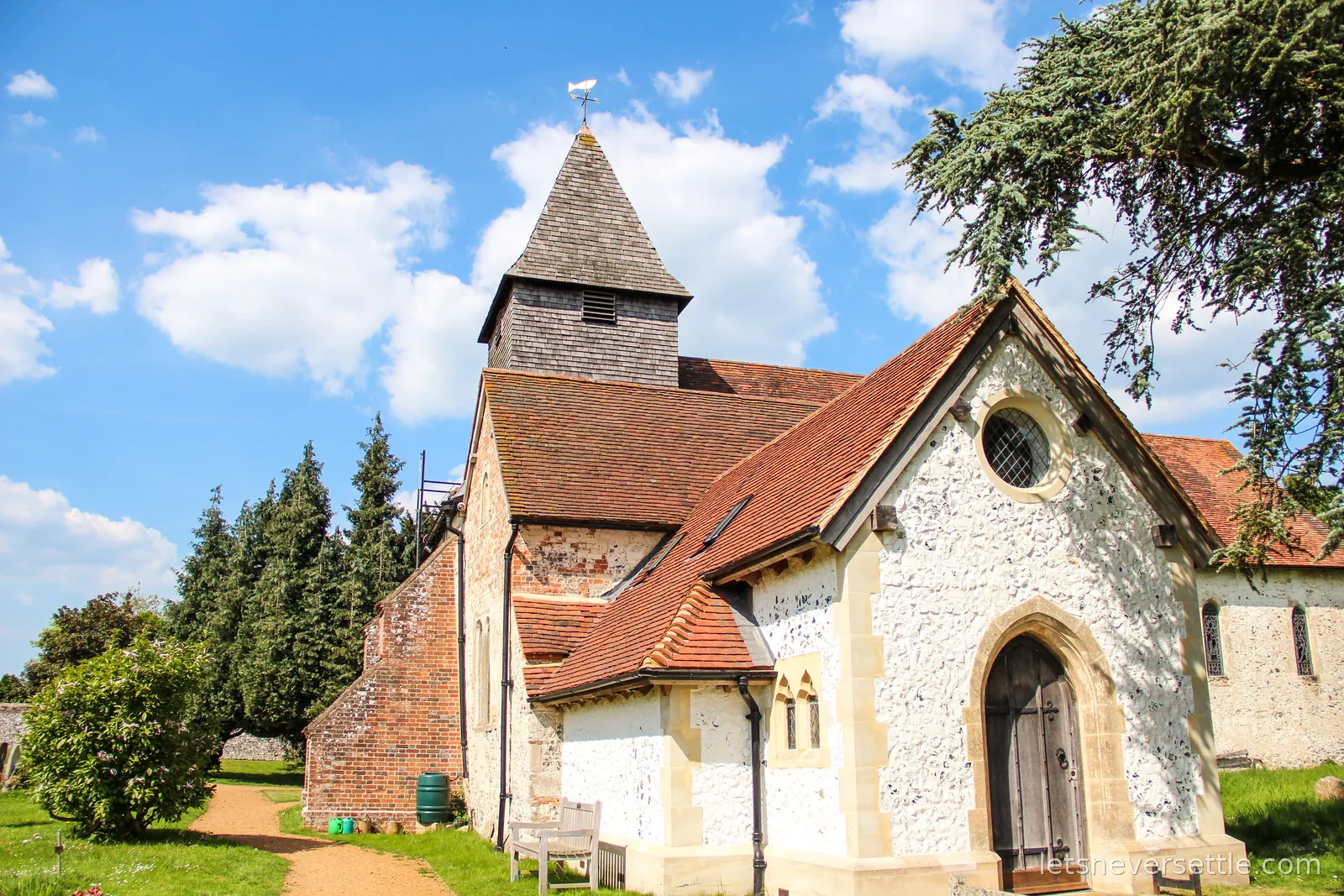
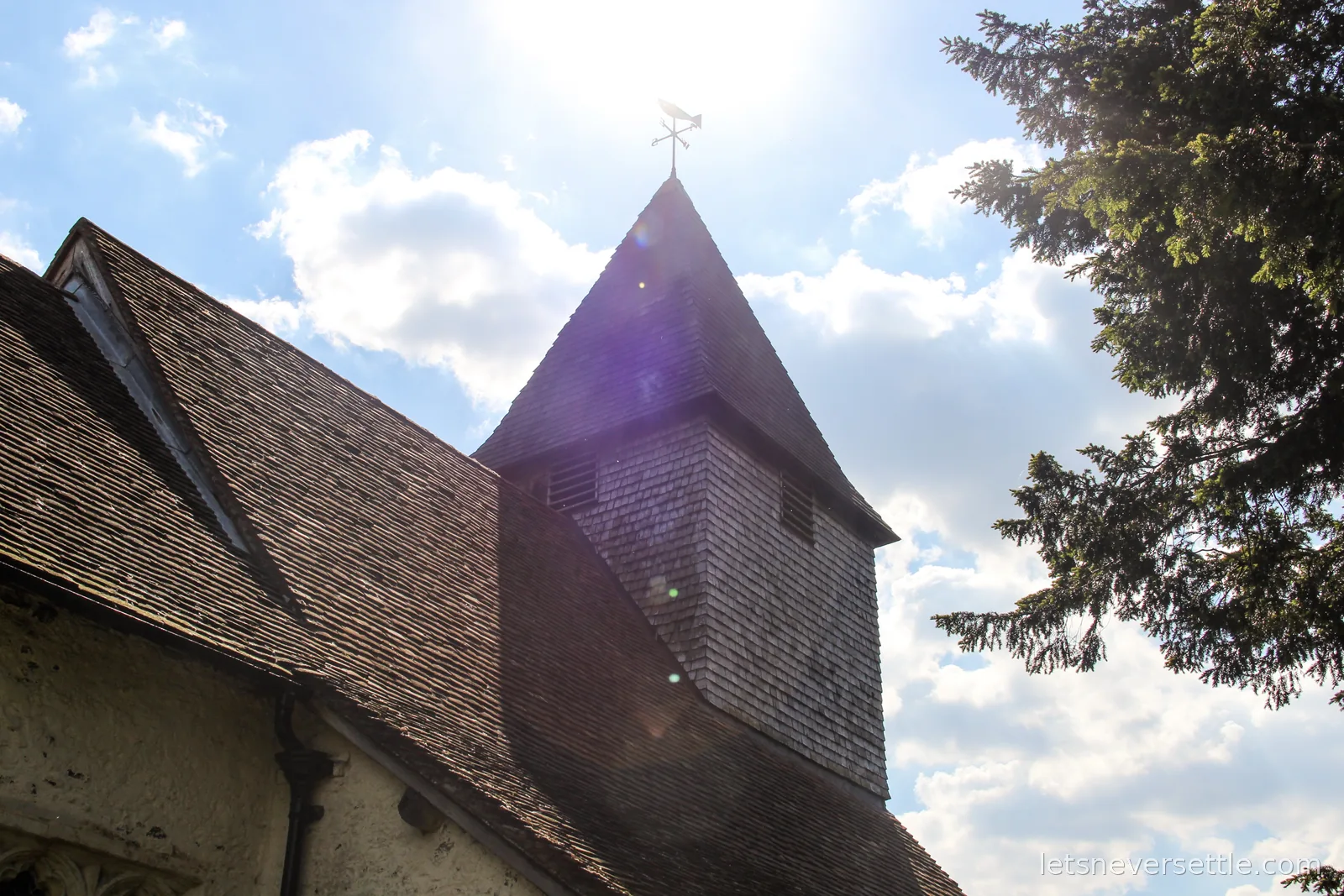
Homework at the North Gate, where the board redraws the walls as they stood in Roman times. The grassy bank behind is the real thing.Roman flint and mortar makes a surprisingly good bench after seventeen centuries of practice.The Silchester Trail keeps you honest. It is quite hard to get lost on a route that is basically a circle.The track around the circuit, cow parsley on both verges and cattle refusing to be impressed by archaeology.St Mary's across the meadow. The church sits just inside the old walls, the town that once surrounded it long gone under the grass.St Mary the Virgin, a patchwork of flint, brick and whitewash that has been collecting centuries since the 1100s.The shingled tower catching the midday sun, weathervane on duty.
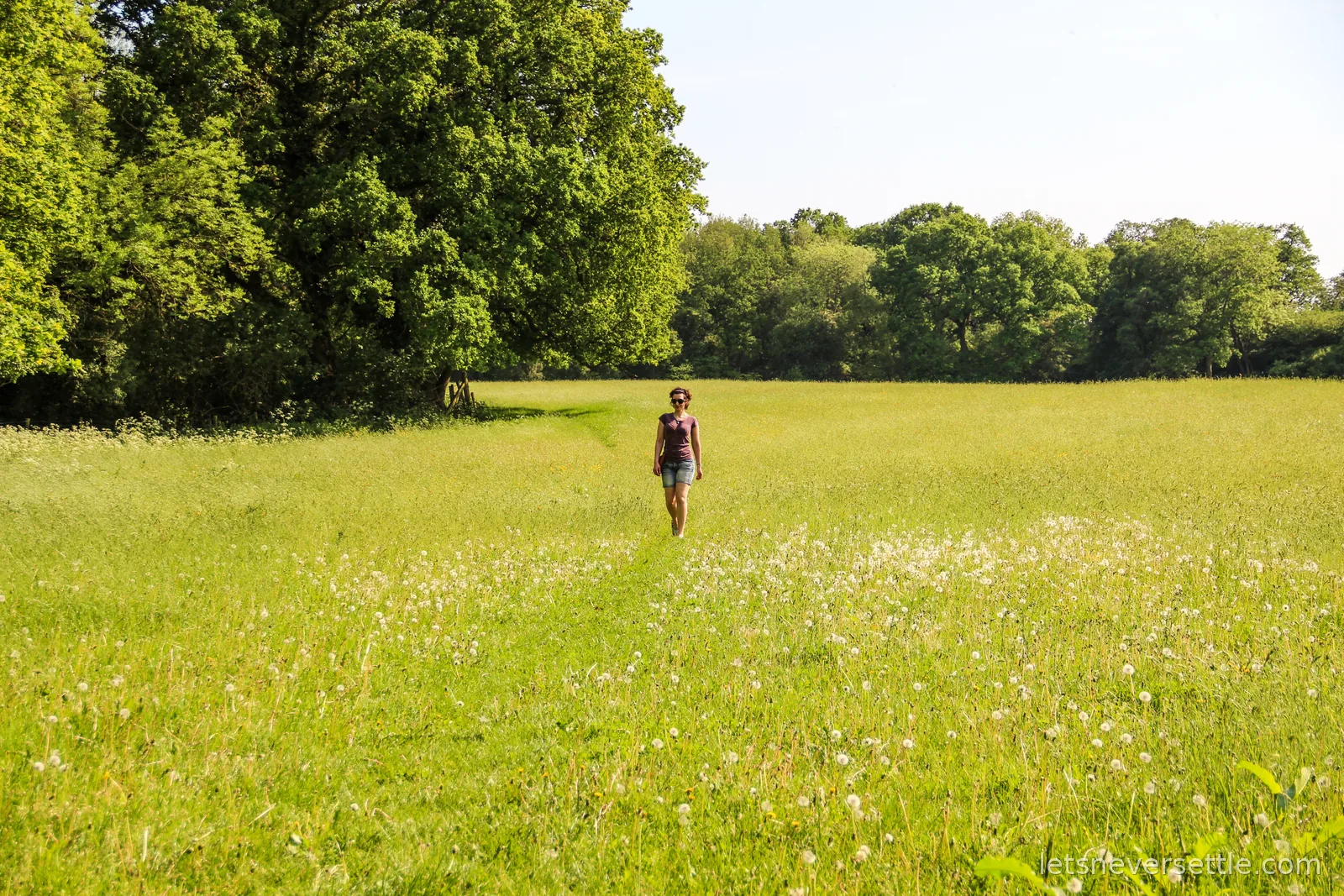
The other thing Silchester has in abundance in May: fields. Green ones, gold-flecked ones, and one that had turned entirely to dandelion clocks.
Inga, waist-deep in young wheat, waving as if this is a perfectly normal place to stand.A meadow gone entirely to seed, in the best possible way.One wish, administered by the approved method.
An entire Roman town for the price of a walk. For more of England’s old stones, there is always Stonehenge, or the museums of Oxford up the road.