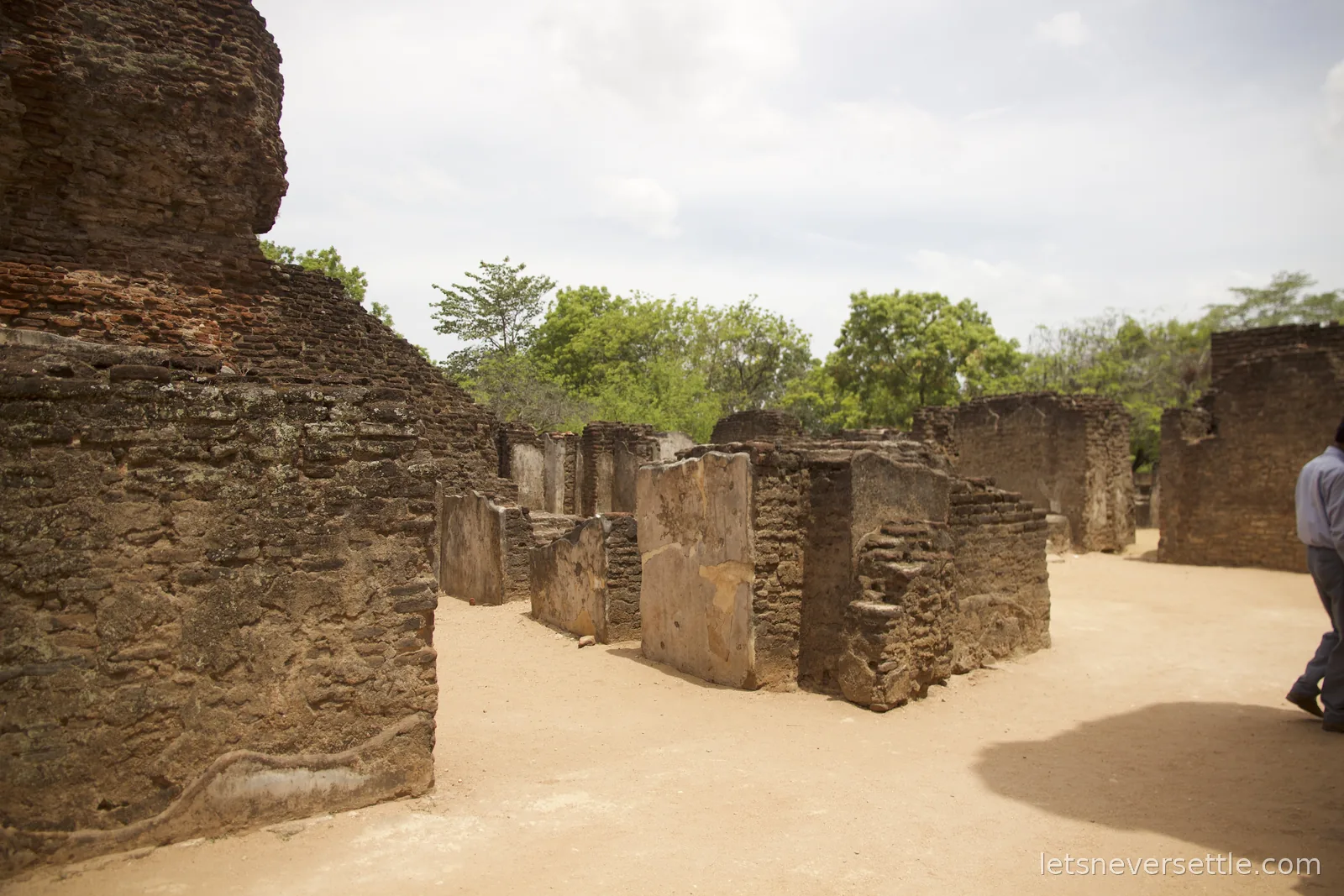
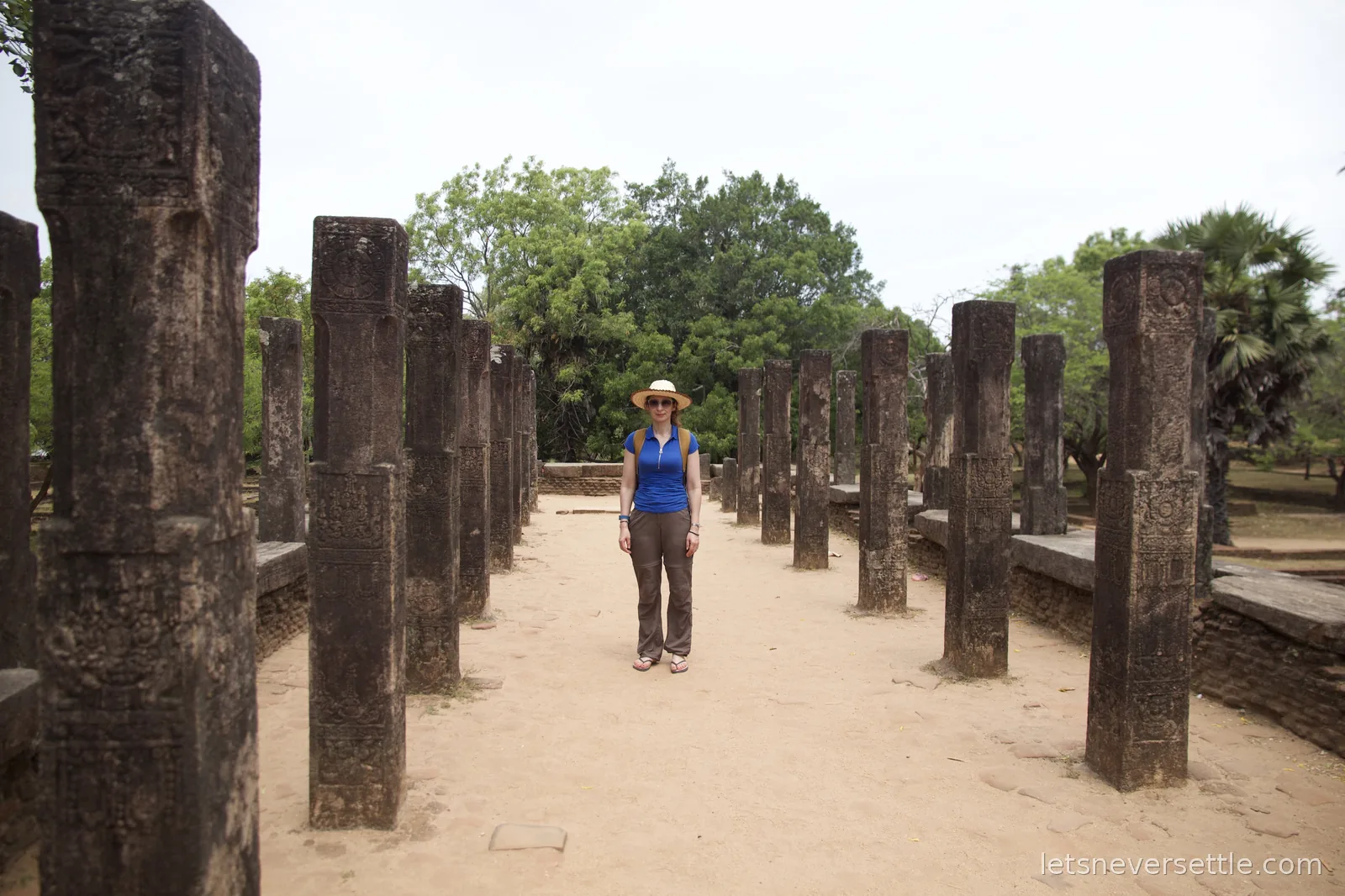
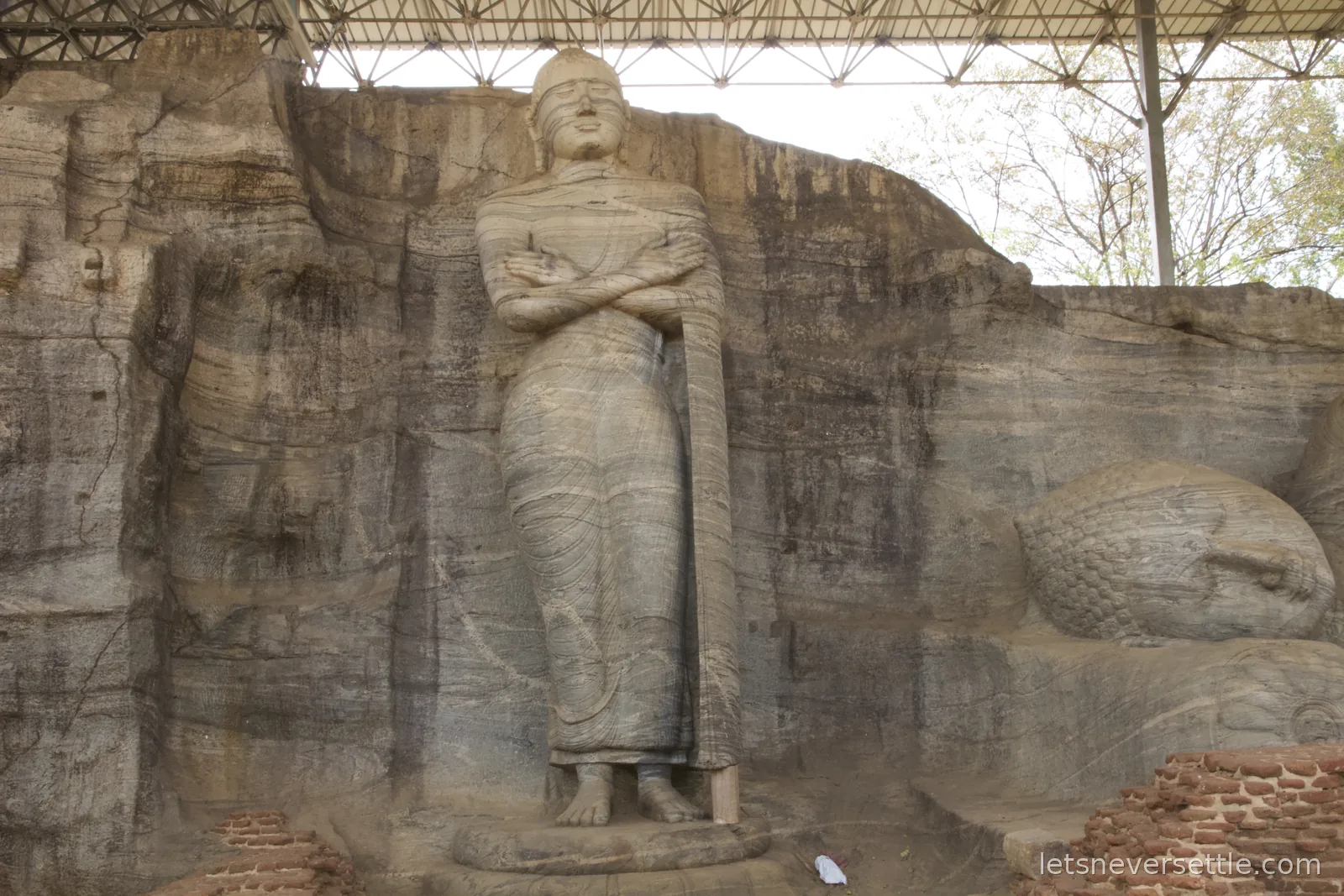
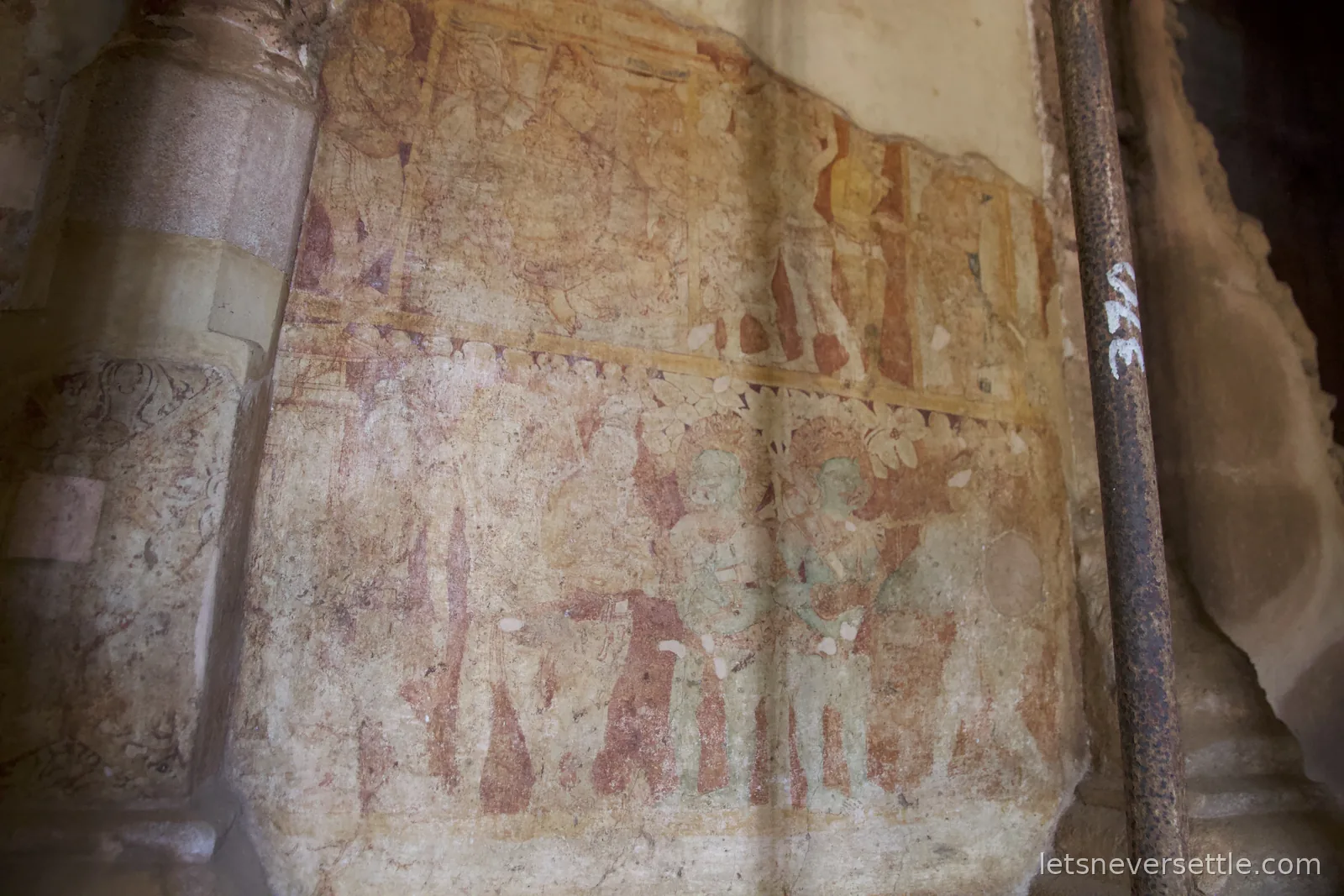
Polonnaruwa in June 2014: brick ruins of the medieval capital, rows of carved stone pillars, faded shrine murals and the rock-cut Buddhas of Gal Vihara.
In June 2014 we spent a scorching day in Polonnaruwa, the medieval capital of Sri Lanka and the heart of the island's ancient cities. Brick, granite and a thousand years of history, laid out under a sky that could not decide between glare and cloud.
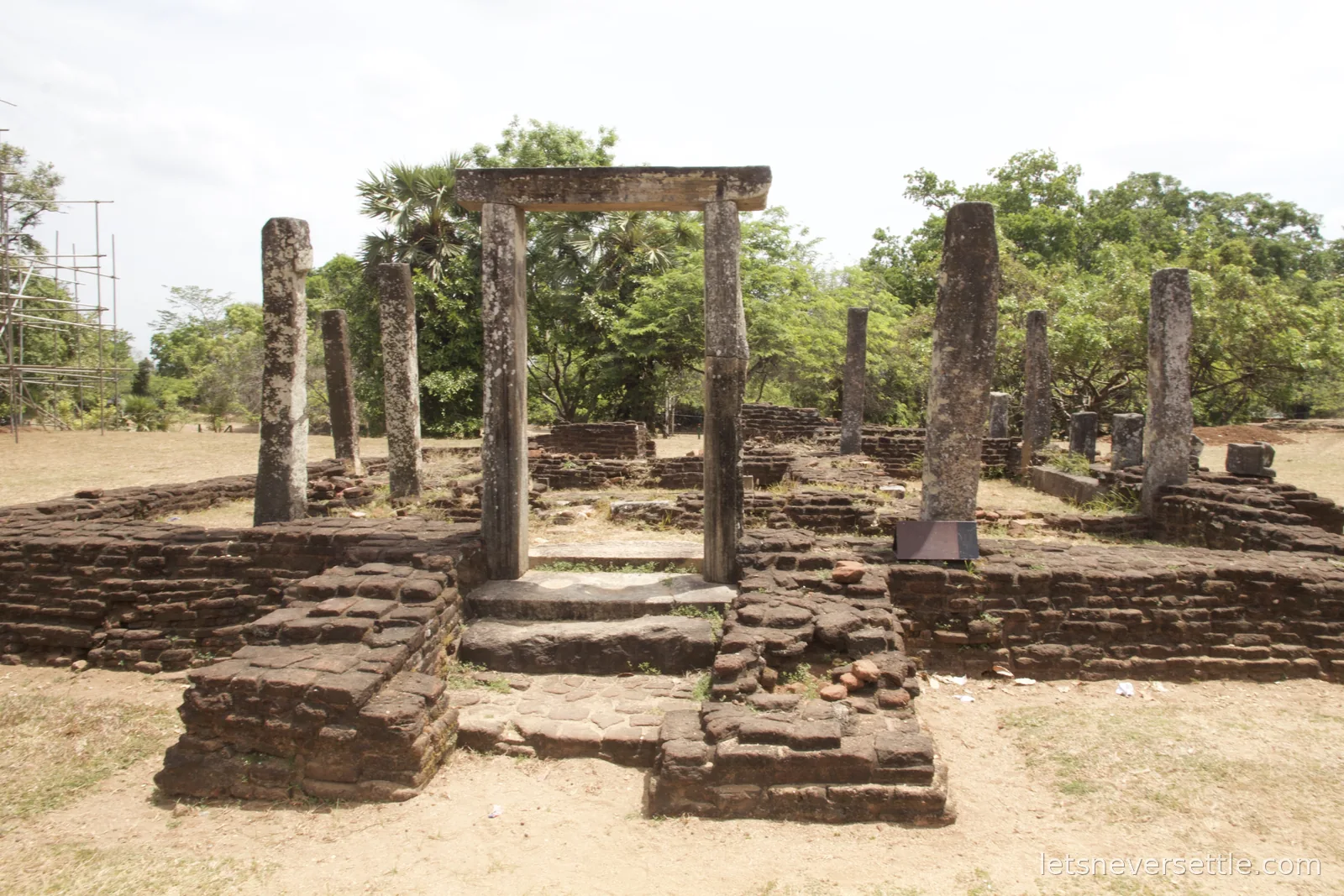
Whole neighbourhoods survive as waist-high brickwork, with patches of the original plaster still clinging on.Inga between rows of carved pillars that once held up a roof. Every face of every column carries its own pattern.Gal Vihara: the standing Buddha with folded arms, cut straight out of the streaked granite, with the reclining Buddha resting beside it.Inside one shrine the murals are still there, faded to the colour of the stone but with the processions of figures just legible.
More from the medieval capital
Polonnaruwa rewards slow wandering: every few hundred metres of sandy path turns up another shrine, another carving, another reminder that this was a working city of the twelfth century.
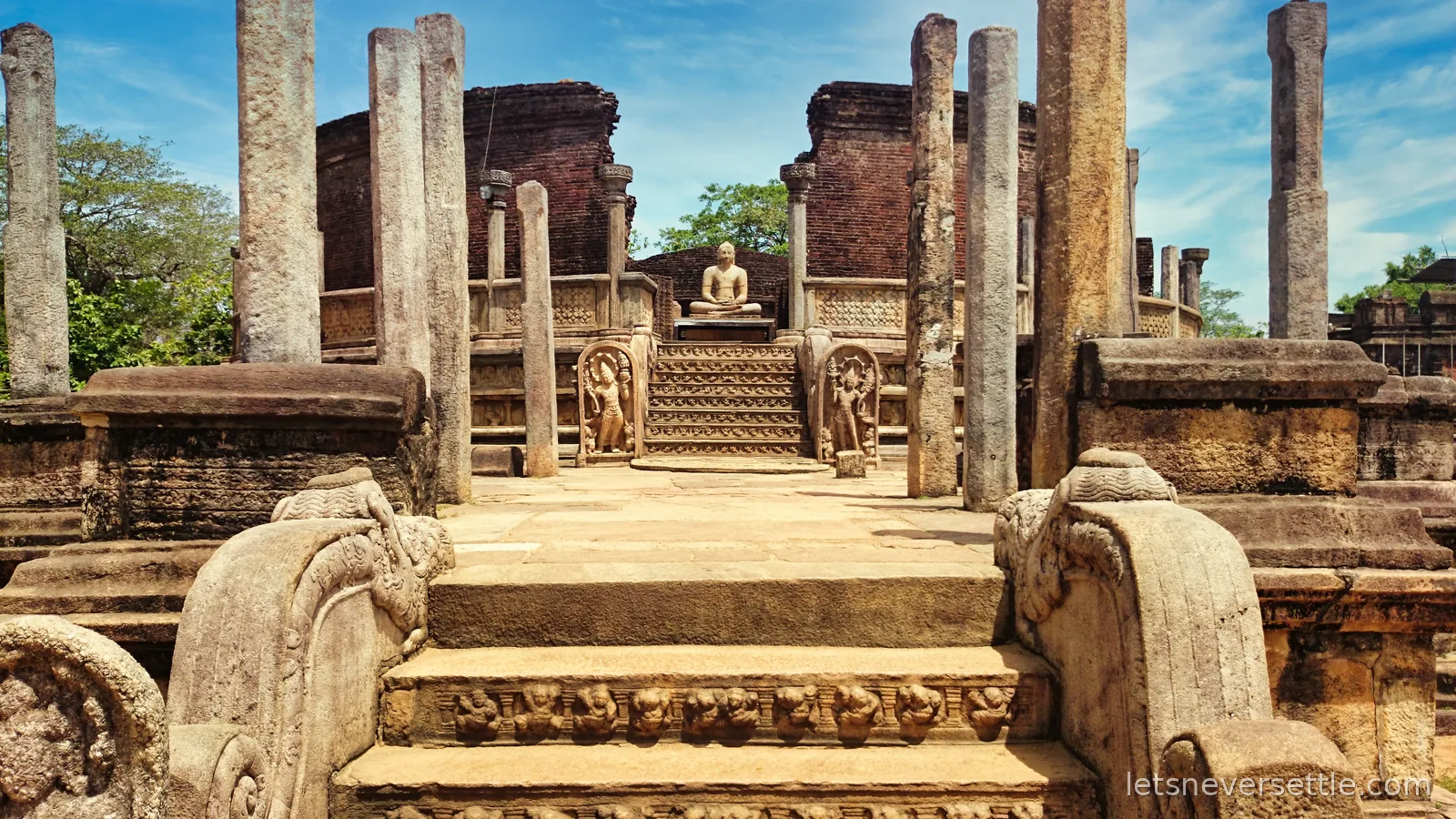
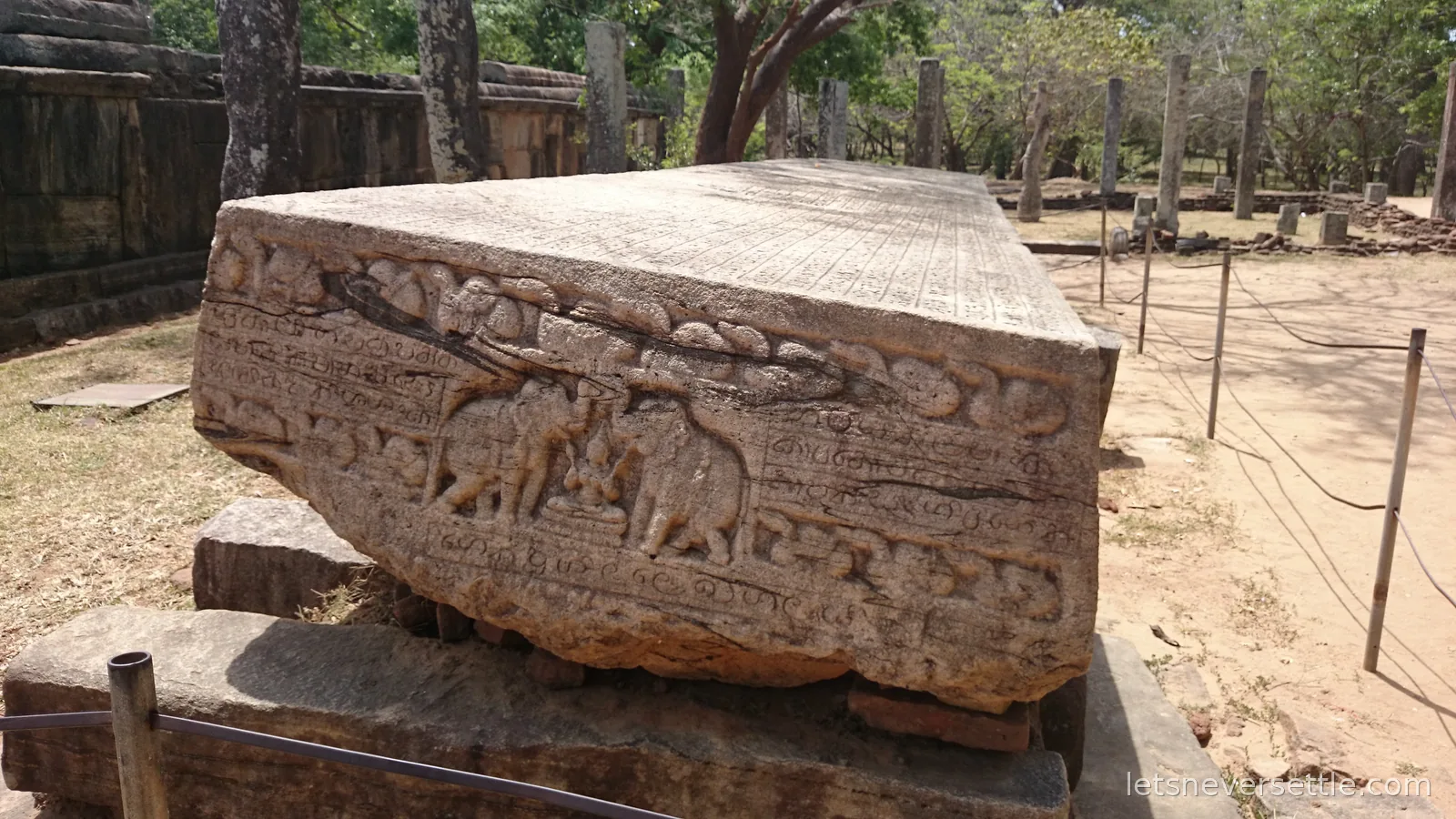
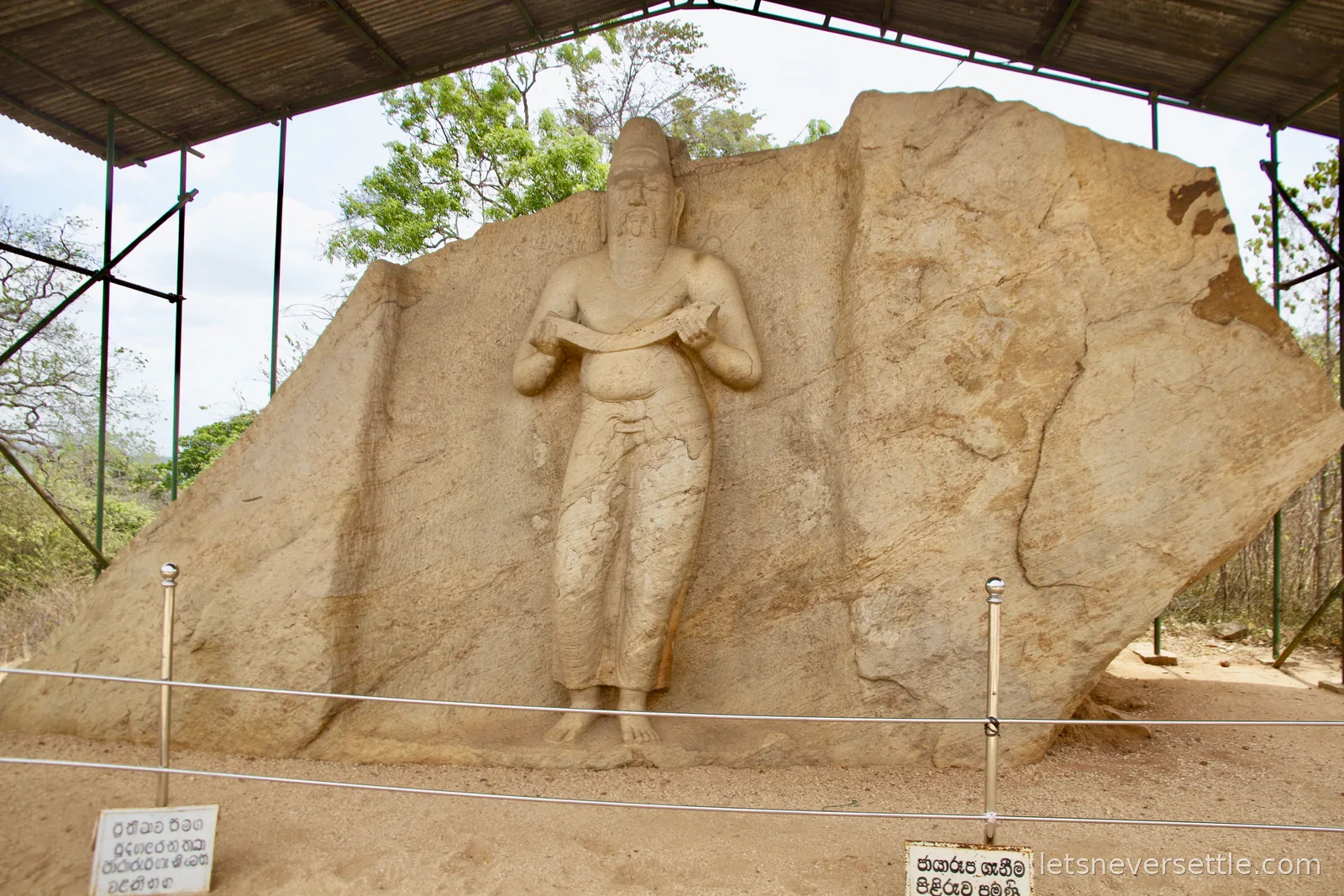
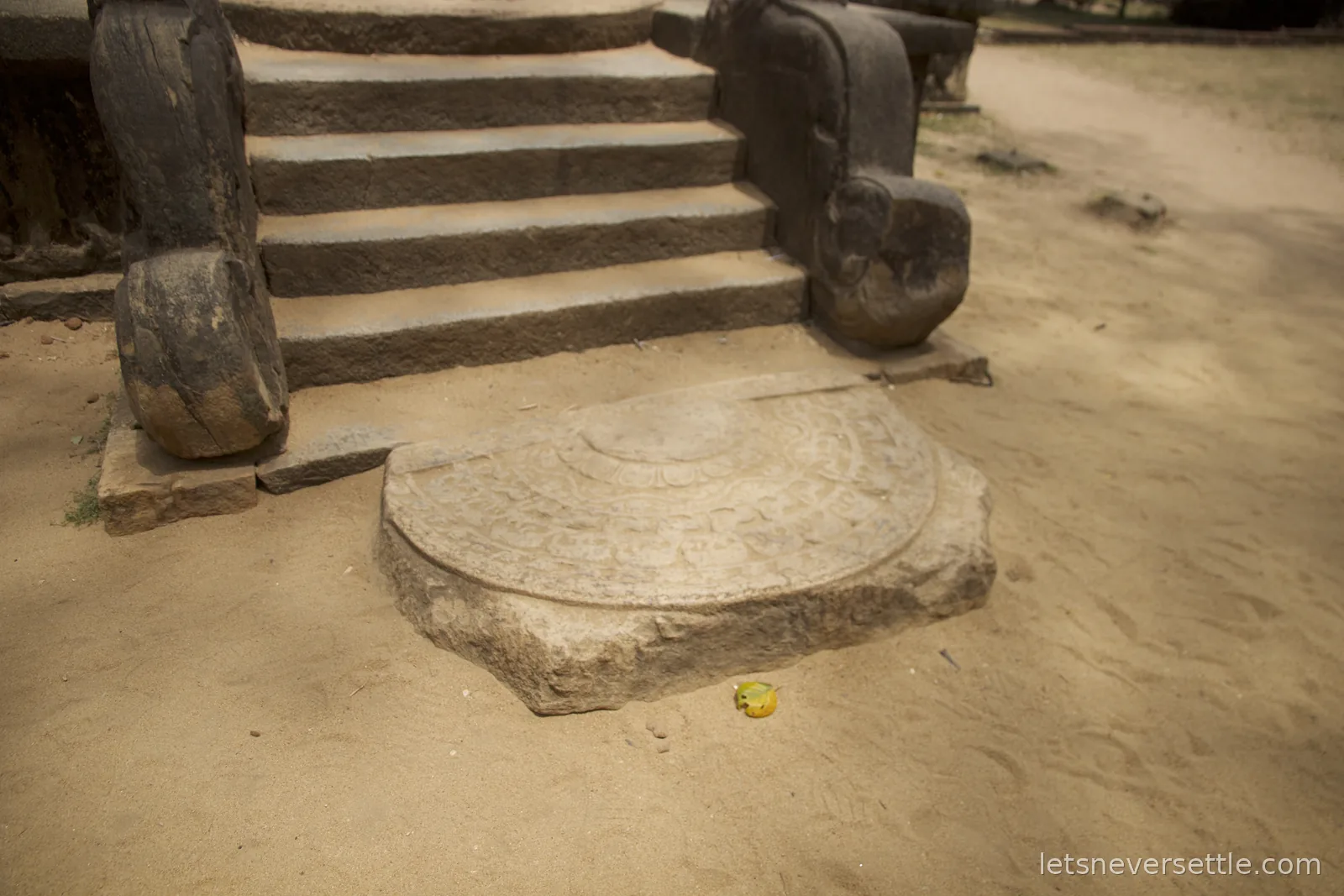
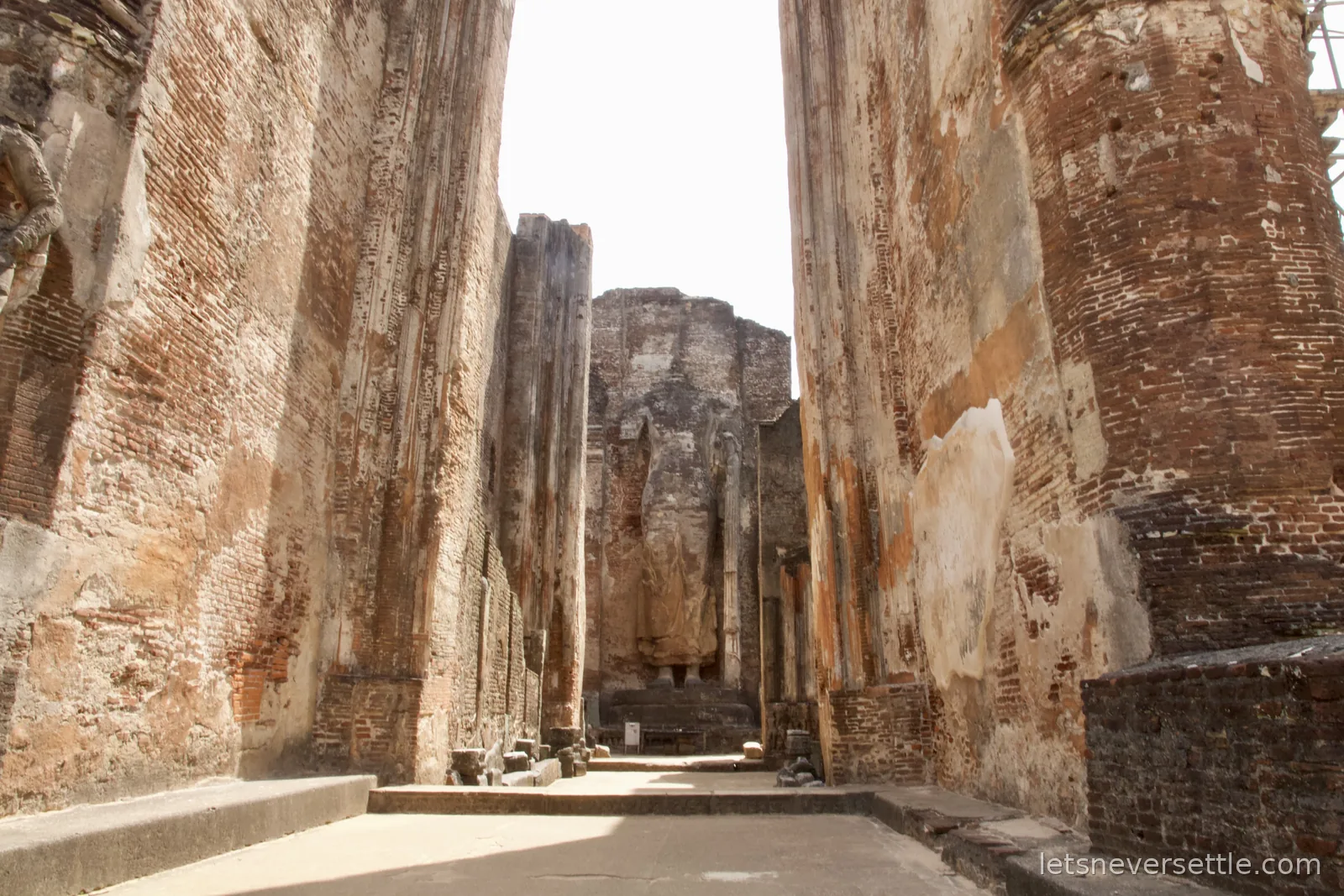
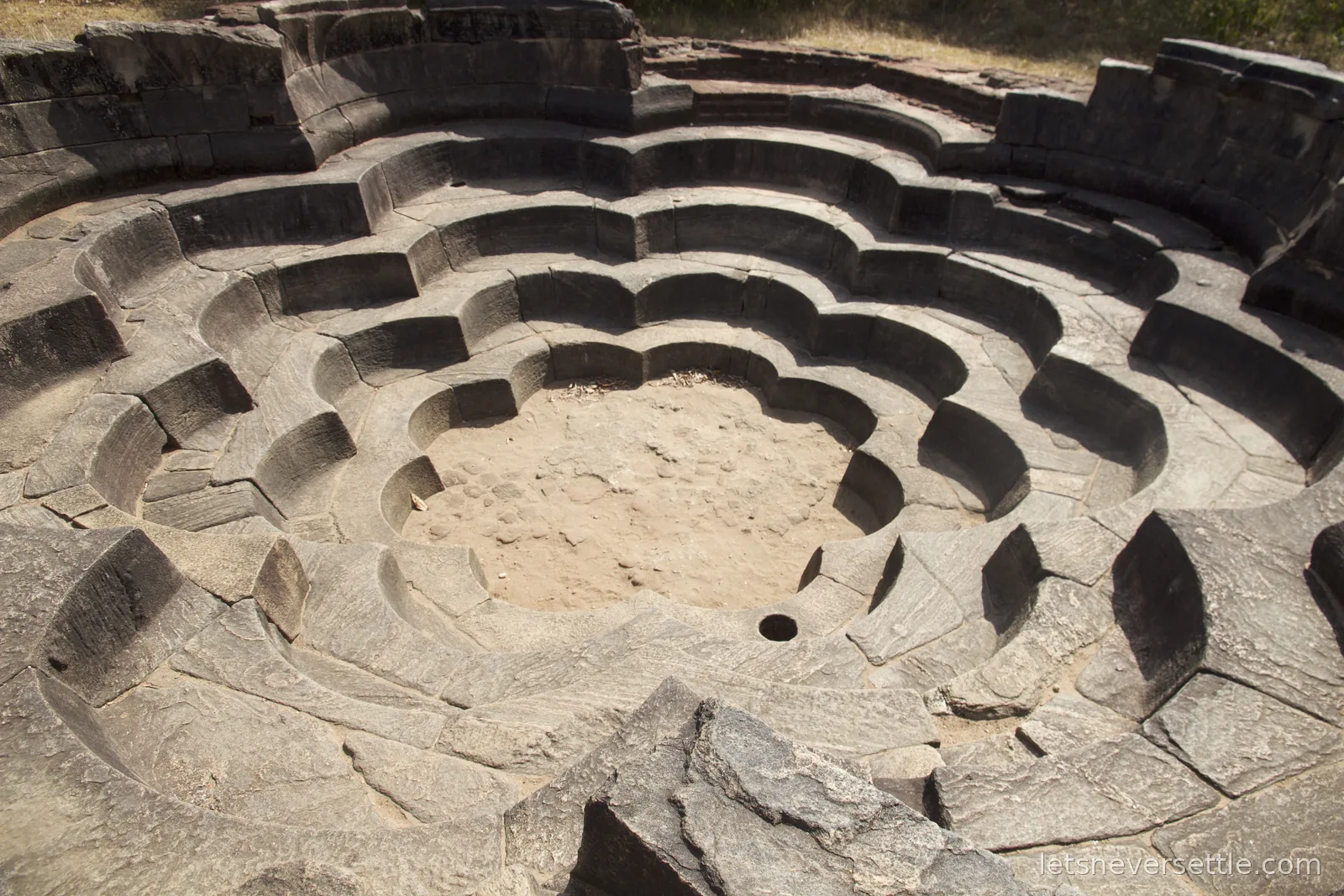
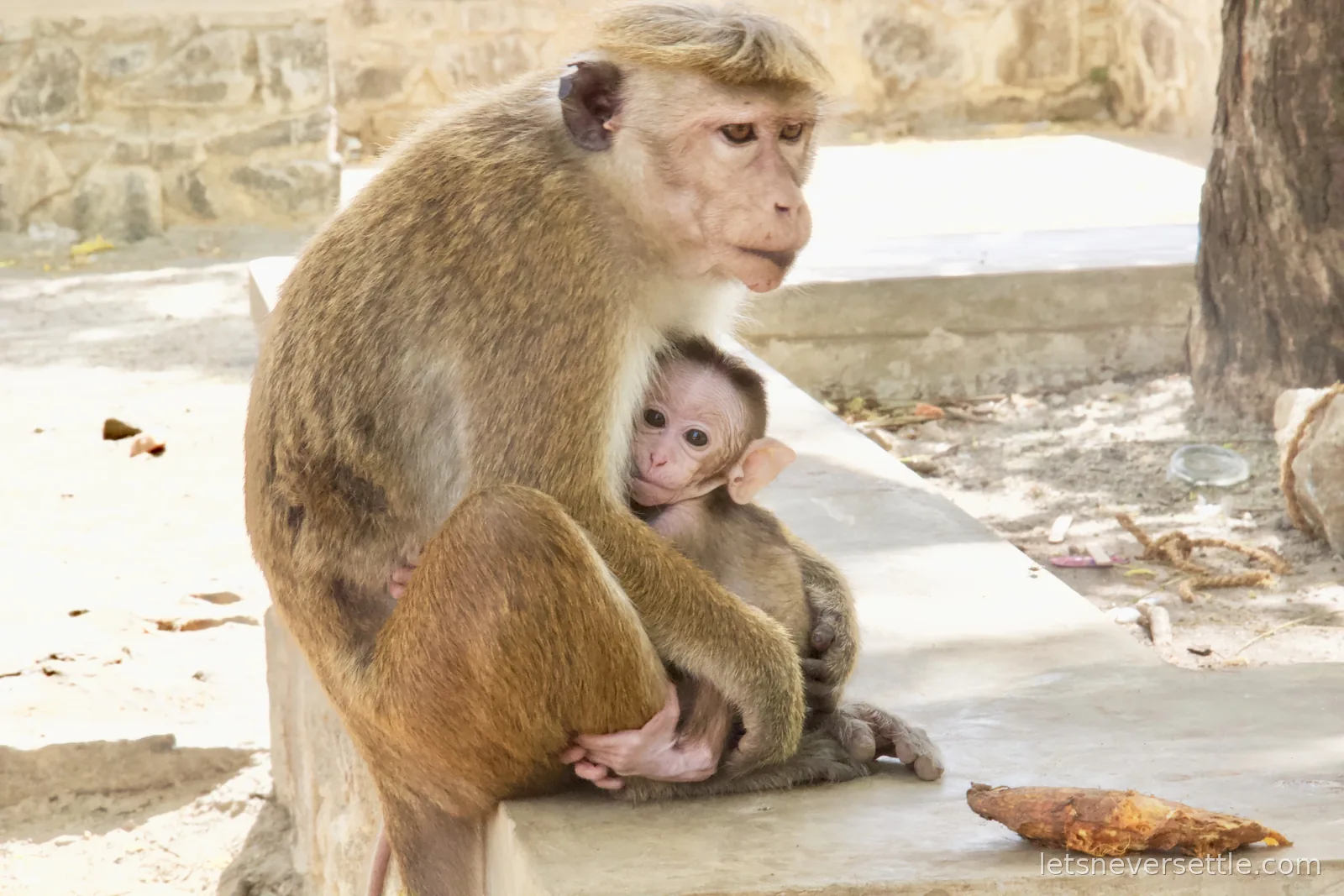
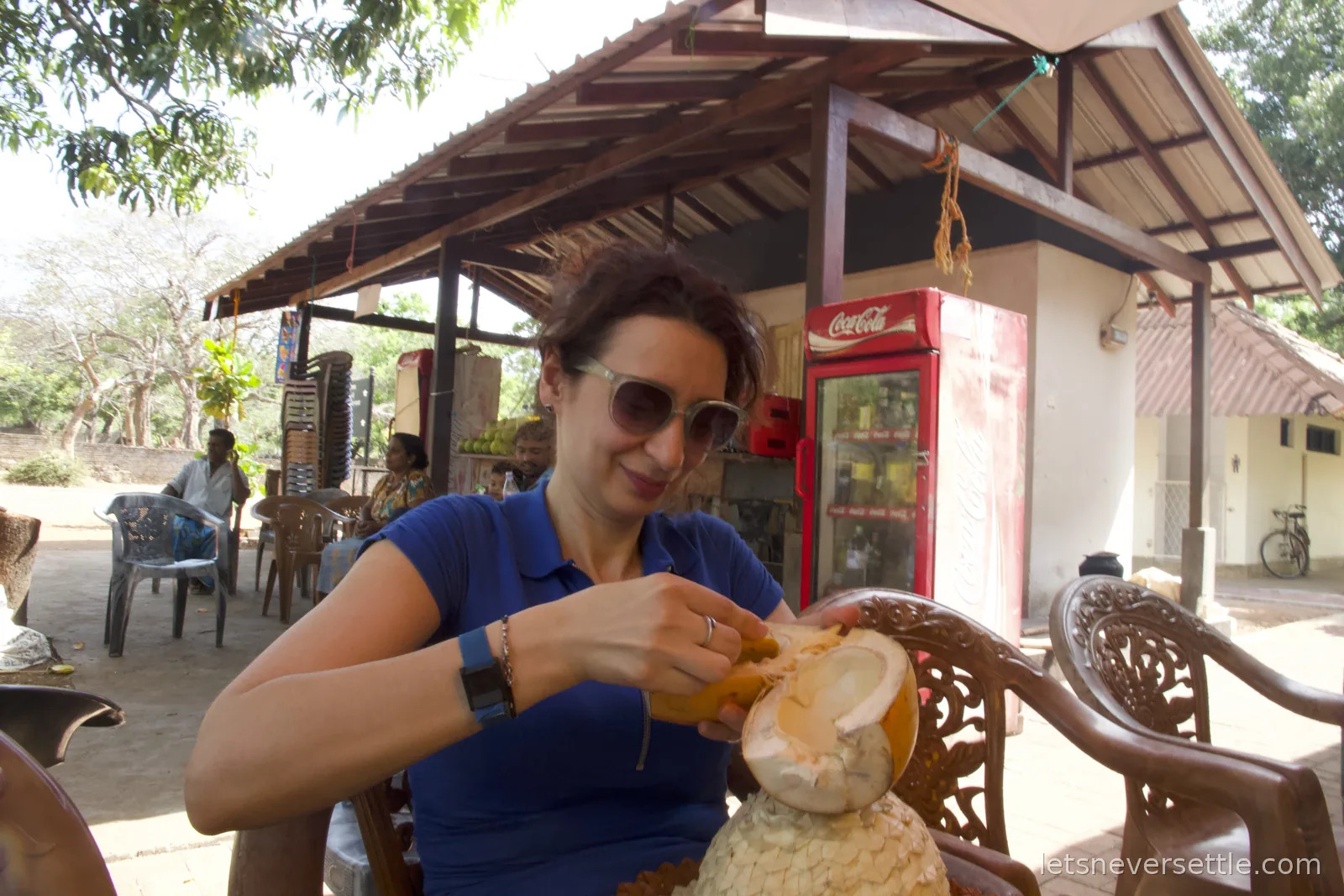
The Vatadage, the circular relic shrine at the heart of the sacred quadrangle. Every step and guard stone on the way up is carved.Gal Potha, the stone book: several metres of royal proclamation carved into a single slab, complete with an elephant frieze.The bearded sage carved straight out of a boulder, manuscript in hand, usually identified as King Parakramabahu himself.The Nissanka Latha Mandapaya, where the pillars curve like lotus stalks. Twelfth century masons showing off, and fair enough.Eight hundred years on, the shrines still get their flowers.Inside Lankatilaka the brick walls still funnel you toward a standing Buddha several storeys tall, headless but not diminished.The lotus pond: a royal bath built as rings of stone petals. Twelfth century landscape design, still the prettiest pool we have seen.The ruins have a resident population of toque macaques who treat the world heritage site as furniture.Refuelling: a king coconut, drunk first, then excavated with a spoon improvised from the husk.
Morning on the great lake
The city only makes sense next to its reservoir. Parakrama Samudra, the sea of Parakrama, is a twelfth century irrigation lake so large that the far shore reads as coastline, and the next morning we went down to the water.
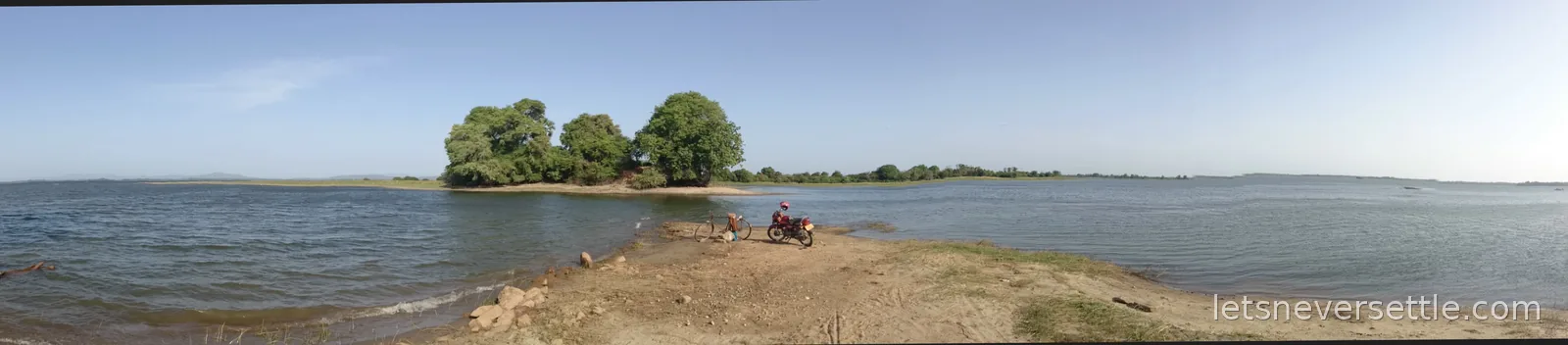
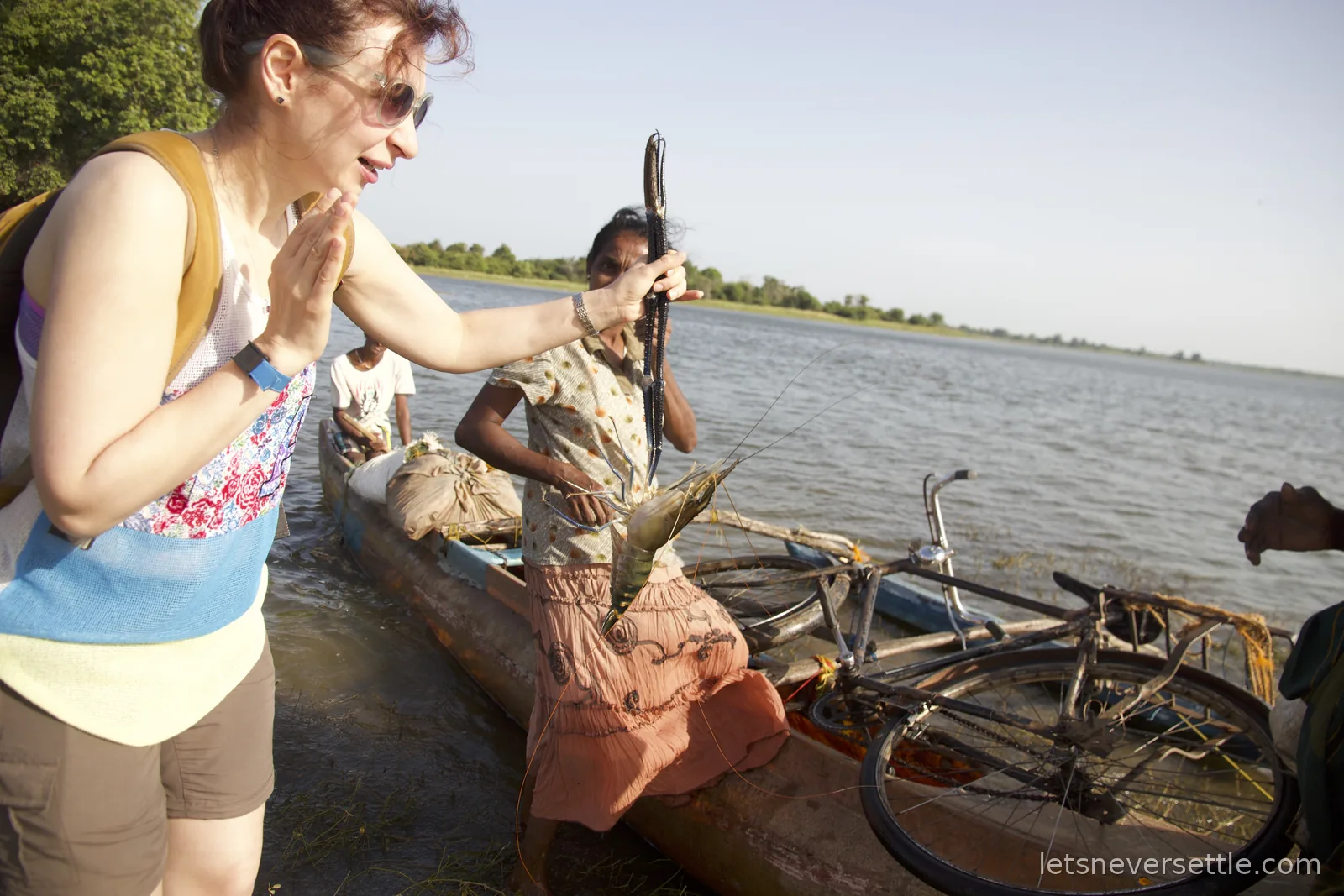
Parakrama Samudra in one sweep: water to both horizons, one sandy spit, one motorbike.A lake fisherwoman produced a freshwater prawn the size of a forearm. Inga's reaction is unedited.Boots off, camera on. The paddling was brief; the lake is enormous and mostly uninterested in tourists.
The granite carving at Gal Vihara alone is worth the drive north. We paired the trip with the rock fortress at Sigiriya and the golden temple at Dambulla, the classic cultural triangle circuit.