Gloucester

A July 2015 afternoon in Gloucester: the cathedral and its cloisters, mosaics underfoot, a tall ship at the docks and the ruins of St Oswald's Priory.

Gloucester got a hot Sunday afternoon in July 2015, and it turned out to be a city best read in layers: cathedral first, then the streets, then the pavements themselves, and finally the docks.

The cathedral
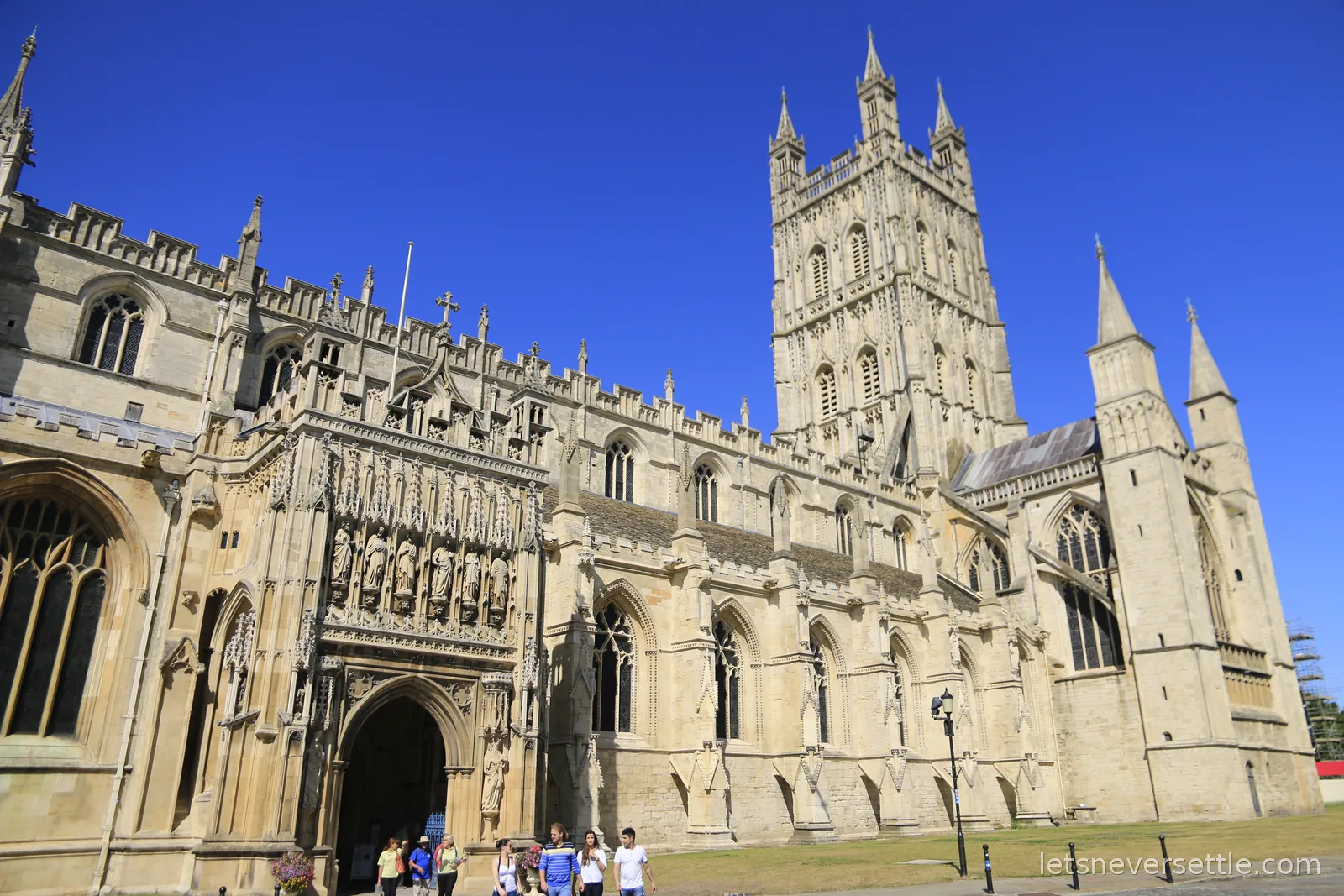
Gloucester Cathedral from the south, its carved entrance porch crowded with statues and the great pinnacled tower against a deep blue sky
Gloucester Cathedral doing its best impression of a postcard. July 2015 threw in that sky for free.

Inside, the cloisters are the show-stealer: fan vaulting pouring down the walls like frozen palm trees, in the corridors Harry Potter fans now queue for.
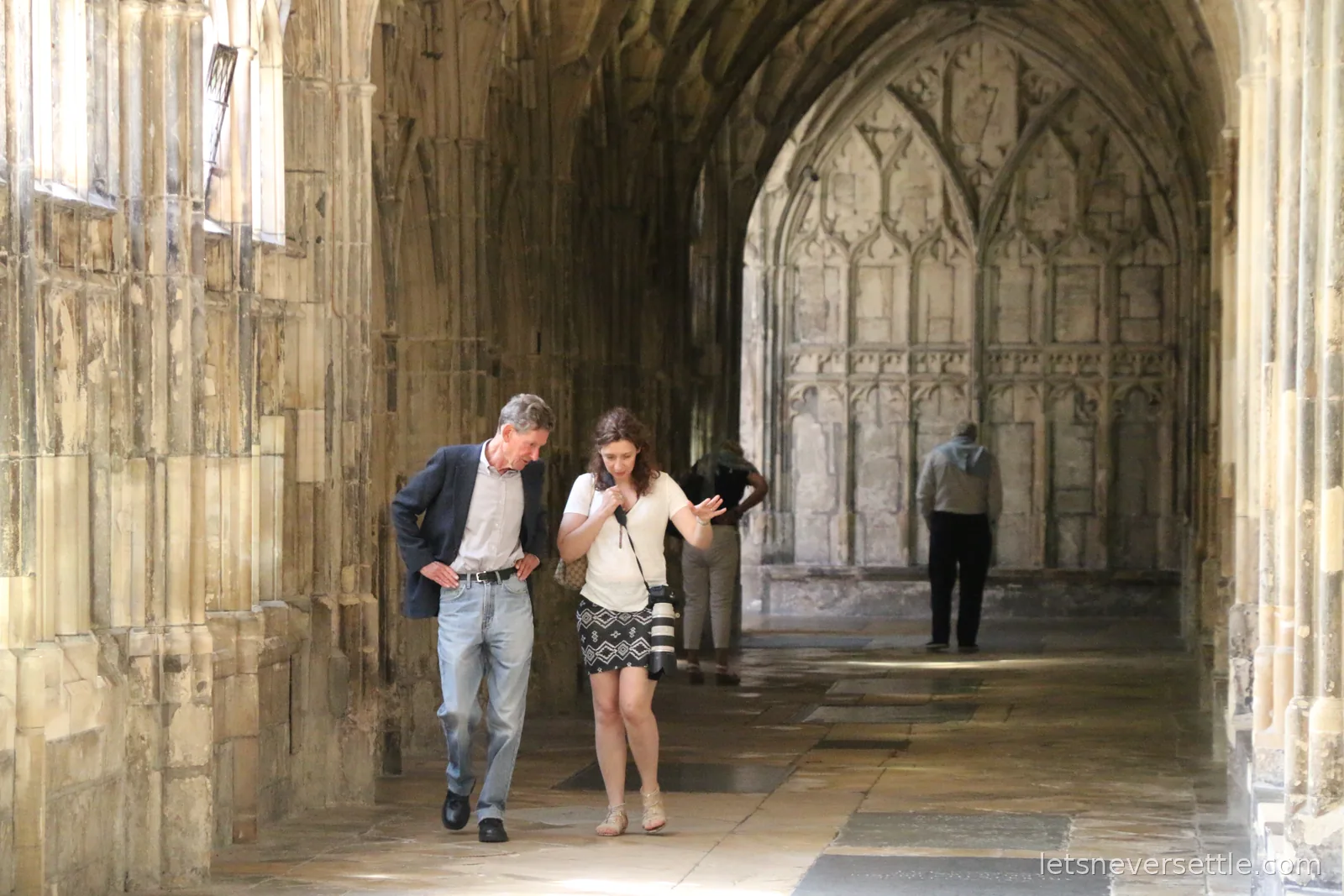
Visitors walking through the fan-vaulted cloister of Gloucester Cathedral, carved stone tracery panels lining the walk
The cloister walk, all fan vaulting and honeyed light. Nobody gets through here quickly.

Streets built on streets

Back outside, the city centre stacks its centuries one on top of another, and the cathedral tower has a habit of appearing at the end of the street.
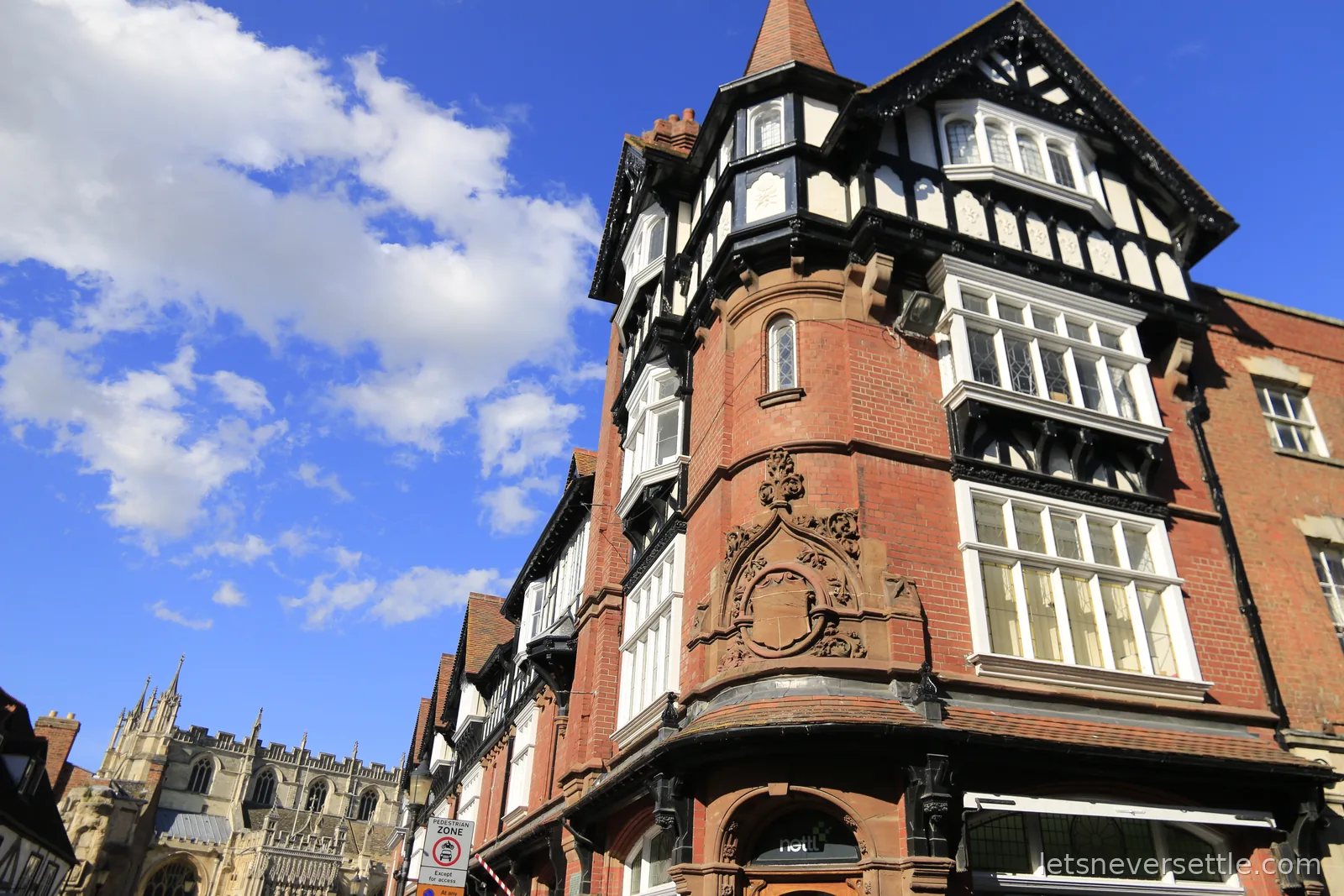
Ornate red-brick corner building with black-and-white timbered upper storeys and a small spire in Gloucester city centre, the cathedral rising in the background
Every era gets a storey: brick below, black-and-white timber above, and the cathedral in the distance keeping an eye on the lot.
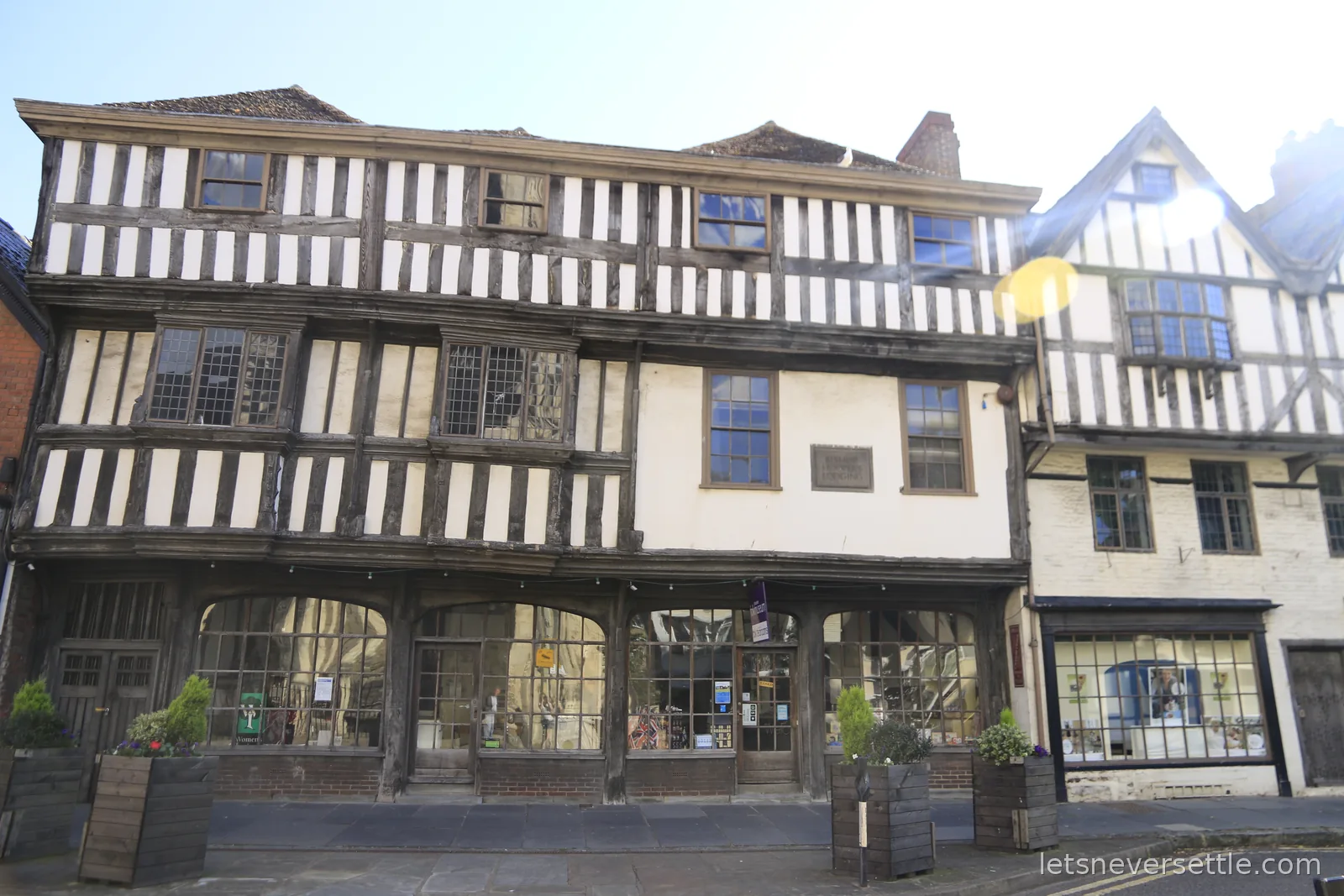
Three-gabled timber-framed Tudor houses in Gloucester with leaded windows and a wall plaque reading Bishop Hooper's Lodging
Bishop Hooper's Lodging: three storeys of Tudor timber leaning companionably into their fifth century.

Look down

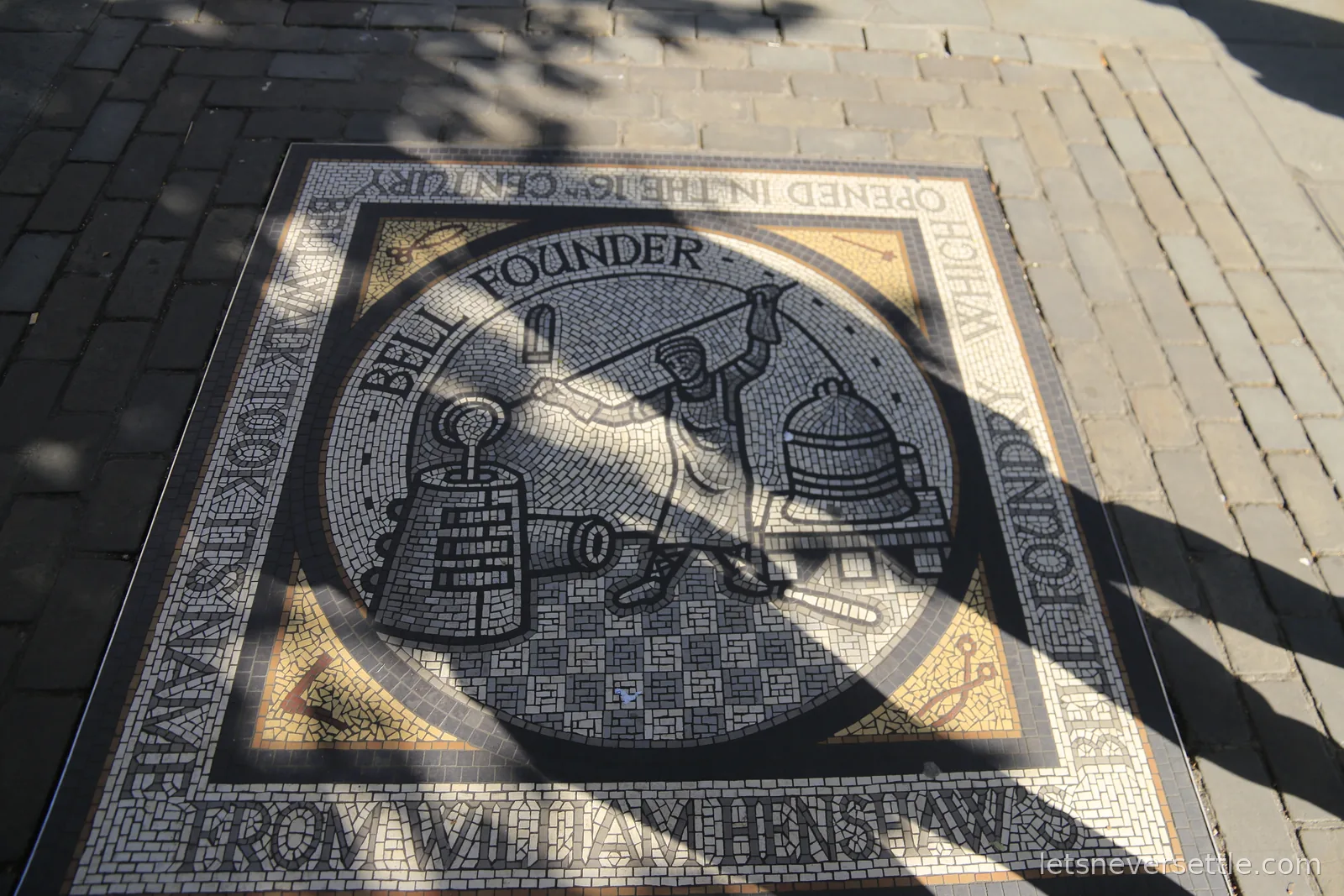
Gloucester also hides history under your feet. Mosaic panels are set straight into the pavements, and we nearly walked over both of these before we noticed.
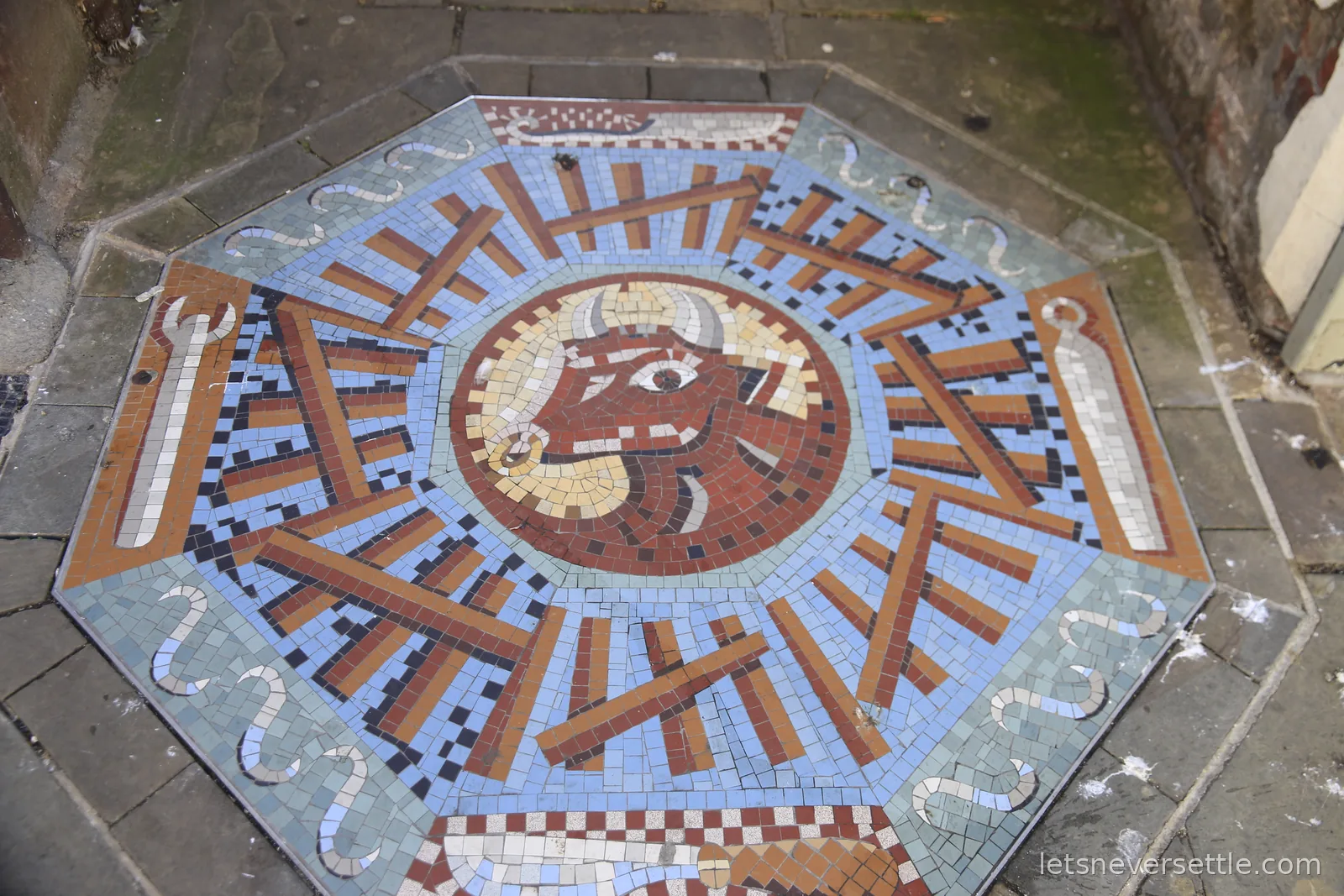
Octagonal pavement mosaic of a bull's head ringed by blue and terracotta tesserae, set into a stone pavement in Gloucester
A bull glaring up from an octagon of tiles, ignored by almost everyone walking over him.
Pavement mosaic of a bell founder pouring molten metal beside a finished bell, with border lettering naming William Henshaw's bell foundry
The bell founder at work. The border remembers William Henshaw, whose bell foundry opened here in the 16th century.

Down at the docks

By late afternoon we were at Gloucester Docks, where Victorian warehouses ring the water and, on our visit, a full tall ship sat at the quay looking thoroughly at home.
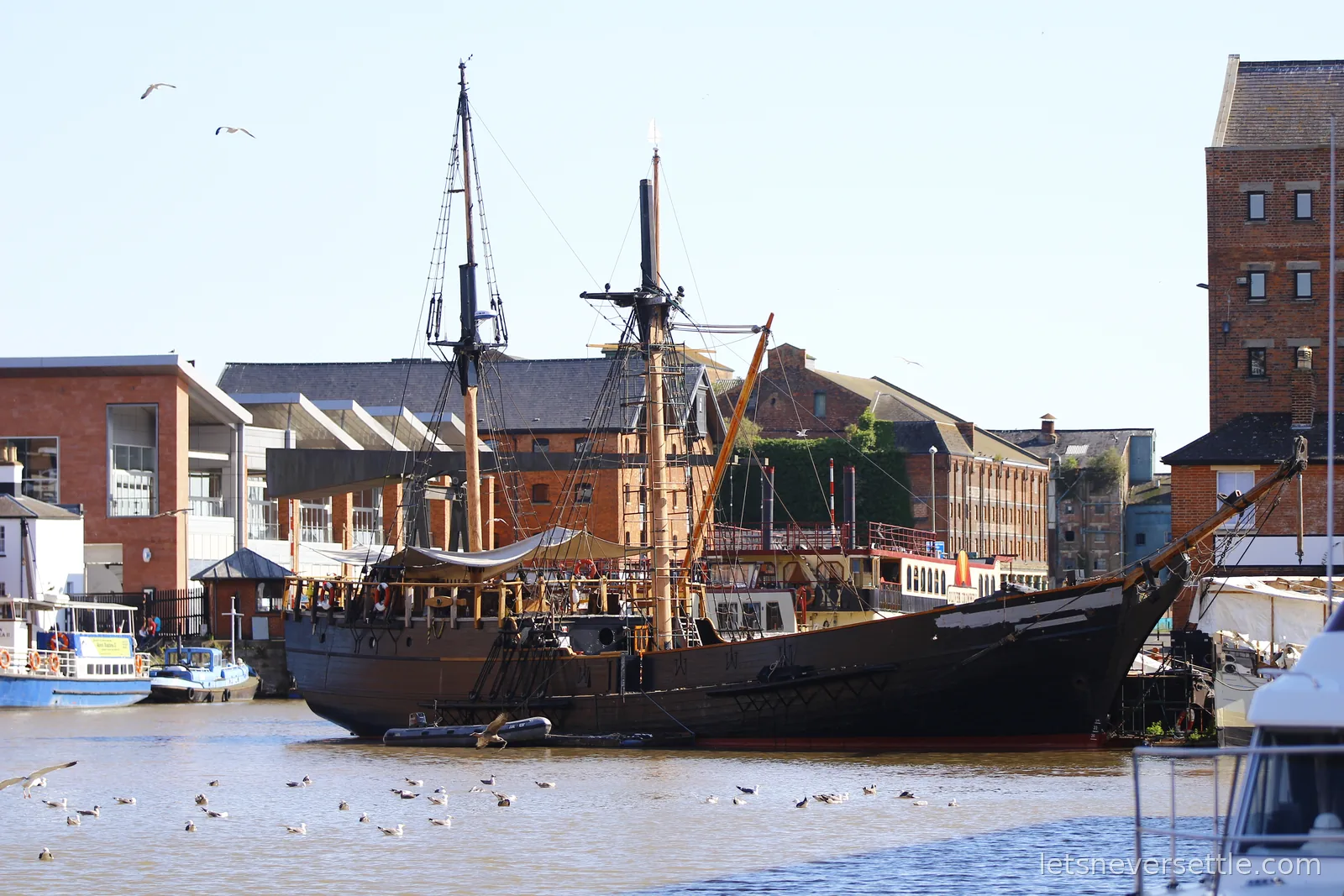
A dark-hulled two-masted tall ship moored at Gloucester Docks, red-brick Victorian warehouses behind and gulls on the water
A tall ship at rest among the warehouses, with the resident gulls running the harbour.

St Oswald's

We finished at the ruins of St Oswald's Priory, where a council information board delivered the best story of the day: the church here was built around 900 AD by Aethelflaed, daughter of Alfred the Great.
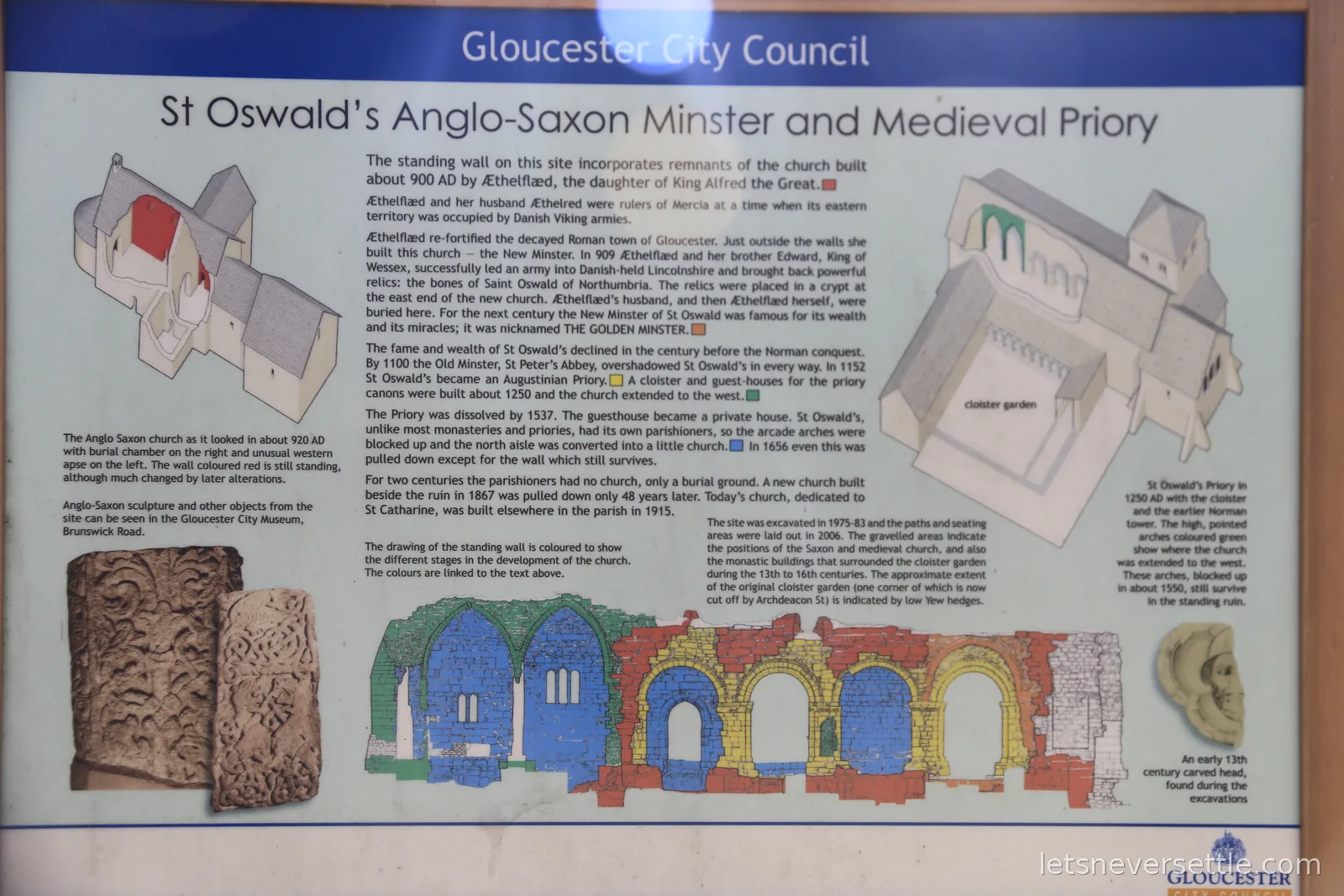
Gloucester City Council information board about St Oswald's Anglo-Saxon Minster and Medieval Priory, with reconstruction drawings of the church through the centuries
The board at St Oswald's. Anything founded by Aethelflaed, ruler of Mercia, earns a careful read.

Gloucester slots neatly into the golden-stone circuit of English days out. If that circuit is yours too, our days in Oxford and Bath are cut from the same cloth.